

Seeding Solutions for All Your Lawn Care Needs

Seeding Solutions for All Your Lawn Care Needs
Patch, overseed, or reseed? Here's how to match the right grass seed project to your lawn's actual condition.
Grass seed can fix many lawn problems, from a few bare spots to a yard that's more weeds than grass, but the right fix depends on how much repair your lawn actually needs. This guide walks through the three seeding solutions—patching, overseeding, and reseeding—so you can match your lawn's condition to the right seeding approach.
Which Grass Seeding Solution Does Your Lawn Actually Need?
Walk your yard and look at how much of it is actually grass. A few isolated bare spots call for patching. A lawn that’s thin all over but still mostly grass calls for overseeding. A lawn where more than half the area is bare soil, dead grass, or weeds needs a full reseed. Picking the right one saves you time, seed, and water compared to under- or over-treating the problem.
Patch: If You Only Have a Few Bare or Thin Spots
Patching means filling in small bare or thin areas, like a dead spot from a dog run, a shady corner that never filled in, or a patch dug up for a repair, without touching the rest of the lawn. If that’s all you’re dealing with, skip ahead to How to Patch Bare or Thin Spots below.
Overseed: If Your Lawn Is Thin But Mostly Healthy
Overseeding means spreading new grass seed over an existing lawn to thicken it up, without tearing anything out. It’s the right call when the lawn is thin or patchy from heat, drought, winter stress, or heavy foot traffic, but the soil and most of the existing grass are still in decent shape. Jump to How to Overseed a Thin Lawn.
Reseed (Renovate): If More Than Half Your Lawn Is Bare, Weedy, or Dead
Reseeding, also called lawn renovation, is a full restart: clearing out what’s there and planting new grass from scratch. It’s worth the extra effort when weeds or bare soil make up more than half of the yard, or when the existing grass is the wrong type for your yard altogether. Jump to How to Reseed (Renovate) a Lawn.
How to Patch Bare or Thin Spots
Small spots don’t need a full project. Just loosen the soil, cover it evenly with seed, water it in, and keep foot traffic off until the new grass is established. EZ Seed Patch & Repair is built for exactly this; it combines seed, a water-absorbing growing material, and starter food in one product, so a single application does the job.

How to Overseed a Thin Lawn
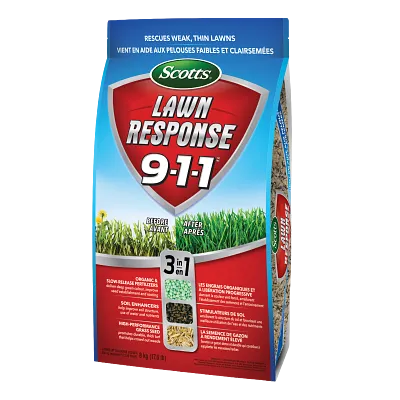
Mow the lawn short and rake it to clear away dead grass and debris so seed can reach the soil, then spread new grass seed with a spreader. Scotts Lawn Response 9-1-1 combines grass seed, fertilizer, and a soil improver into one product that’s built specifically for thickening up a thin lawn. You can also overseed your lawn using one of Scotts Turf Builder Quick + Thick Grass Seed Mix varieties, that best match your lawns environment.

How to Reseed (Renovate) a Lawn
A full reseed starts by clearing out the old lawn, either by smothering it without chemicals (solarizing with plastic or layering with newspaper). From there, the process matches planting a brand-new lawn: prep the soil, spread seed, and feed with a starter fertilizer such as Turf Builder Starter Food for New Grass to help new roots establish.

When Is the Best Time to Plant Grass Seed?
For cool-season grass in Canada, early fall (roughly the two weeks before or after Labour Day) is the best window, giving new seedlings time to build roots before winter.




Frequently Asked Questions - Grass Seed
How Long Does It Take Grass Seed to Grow?
Germination speed depends on the seed: ryegrass is typically the fastest to sprout, while fine-textured seed like Kentucky bluegrass takes longer since it has less stored energy reserves per seed than larger seeds like tall fescue. Most lawns show first sprouts within one to a few weeks, but a noticeably thicker, more established look generally takes six to eight weeks.
Can I Plant Grass Seed After Using a Weed Killer?
Usually, but timing matters and depends on the specific product. As a general rule, wait at least 4-5 months after a crabgrass preventer, or at least 1 month after most other lawn weed killers, before seeding unless the product label specifically says it’s safe to use when seeding. Always check the label of the product you used.
How Soon Can I Mow After Seeding?
Wait until new grass reaches mowing height, typically 3 to 4 inches, before the first cut, and use a sharp blade on dry grass. If you overseeded into an existing lawn, you can keep mowing as needed—just try to limit how often you mow over the new seedlings until they’re established.