




Update Location
Enter a ZIP code to get product recommendations and information tailored to your area.
Active Ingredients
Cautions
Disposal Methods
Product Label
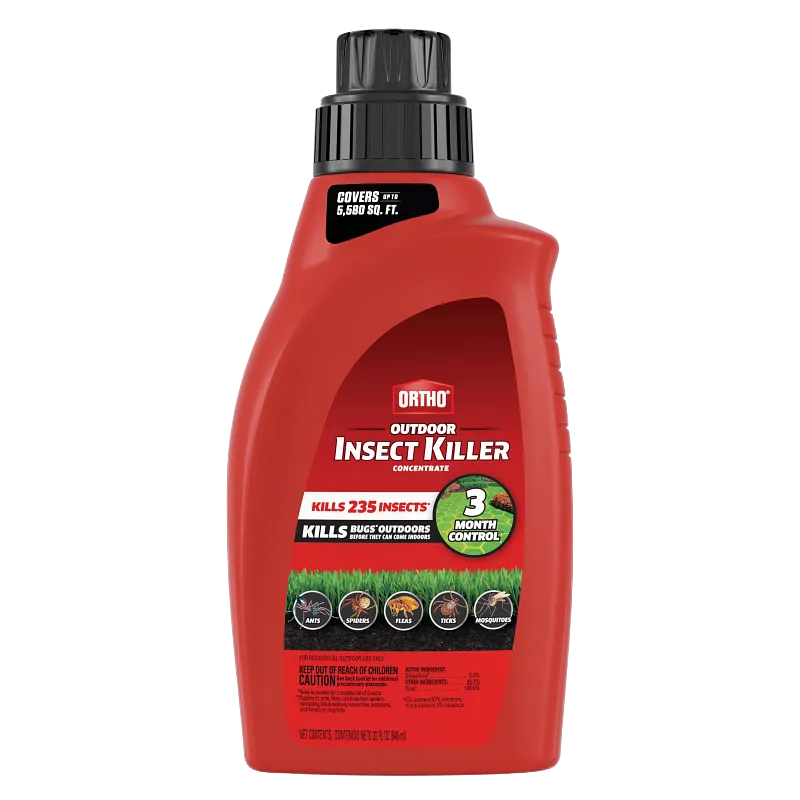
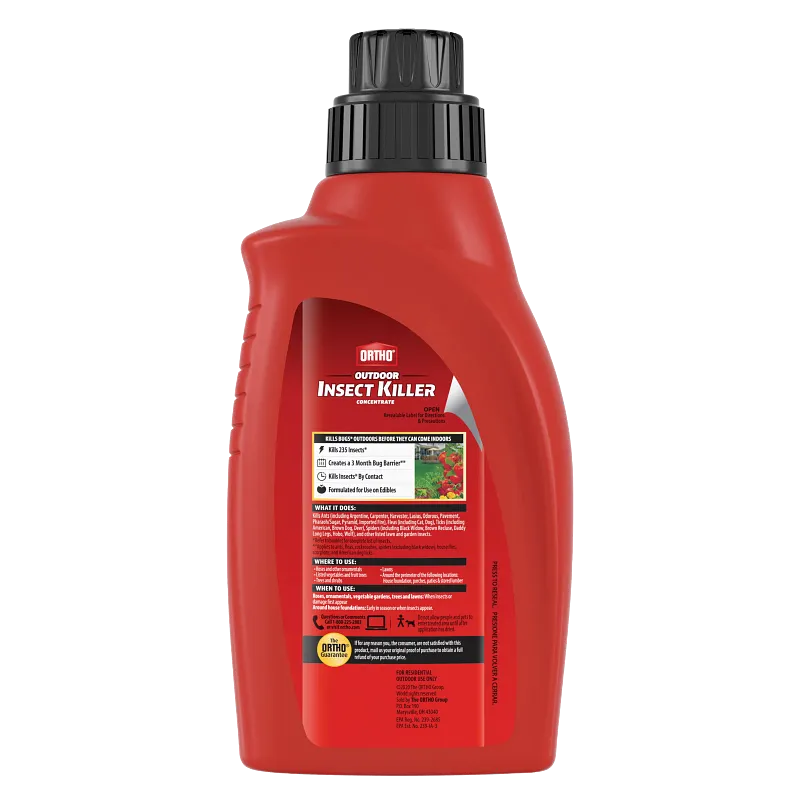
Ortho® Outdoor Insect Killer Concentrate kills 235 listed bugs, including ants, spiders, fleas, ticks and mosquitoes outdoors before they can come indoors (refer to product label for complete lists of insects). The formula kills insects by contact and can be used to protect your lawn, flowers, vegetable gardens and fruit trees. Use around the perimeter of your house to create a bug barrier for up to 3 months of protection (refer to product label for details). It's also formulated for use on edibles (refer to product label for full list). Dilute this product according to instructions and apply using a tank sprayer. On roses, ornamentals, vegetable gardens, trees and lawns, use when insects or damage first appear. Around your house foundation, use early in the season or when insects appear. Allow the area to dry before people and pets re-enter. Each 32 fl. oz. container treats up to 5,580 sq. ft.
How to Use
Treating Roses, Flowers, Shrubs, and Small Trees
Treating the Perimeter of House Foundations, Porches, Patios, and Stored Lumber
Treating Lawn Insects
Treating Vegetable Gardens and Melons or Nut and Fruit Trees
Where Not to Use
Where to Use
When to Apply
How Often to Apply
Mixing Instructions
Adelgids (including Eastern Sprucegall ), Ants (including Argentine, Carpenter, Harvester, Lasius, Odorous, Pavement, Pharaoh/Sugar, Pyramid, Imported Fire), Aphids (including Apple, Black Cherry, Black Pecan, Buckhorn, Greenbug, Pea, Root, Rose, Rosy Apple, Walnut, Yellow Pecan), Apple Maggot, Armyworms (including Beet, Fall, Southern, True, Yellowstriped), Bagworms, Bees, Beetles (including Banded Cucumber, Bean Leaf, Blister, Black Flea, Black Turfgrass Ataenius, Colorado Potato, Dichondra Flea, Elm Leaf, Ground, Adult Japanese, Mexican Bean, Pine Chaer, Pine Shoot, Red Flour, Rose Chafer, Sap, Southern Corn Leaf, Spotted Cucumber, Striped Cucumber, Sweetpotato Flea, Whitefringed), Bluegrass Billbug, Borers (including American Plum, Common Stalk, European Corn, Hop Vine, Lesser Peachtree, Peachtree, Peach Twig, Southern Corn, Southwestern Corn, Stalk, Squash Vine), Boxelder Bug, Brown Leaf Notcher, Caterpillars (including Alfalfa, Alfalfa Looper, Banded Ash Clearwing, Blueberry Spanworm, Budworms, Cabbage Looper, Celery Looper, Cranberry Fruitworm, Cross-Striped Cabbageworm, Filbertworm, Green Cloverworm, Green Fruitworm, Hickory Shuckworm, Imported Cabbageworm, Melonworm, Navel Orangeworm, Painted Lady, Pickleworm, Rindworm, Saltmarsh, Tent, Tobacco Hornworm, Tomato Fruitworm/Corn earworm, Tomato Hornworm, Tomato Pinworm, Velvetbean), Celery Leaftier, Centipedes, Chiggers, Chinch Bugs (including False, Hairy, Southern), Cicadas (including Periodical), Cockroaches (including American, Asian/Oriental, Brown Banded, German, Smokybrown), Corn Rootworms (including Mexican, Northern, Southern, Western), Crickets (including House), Cutworms (including Black, Dingy, Spotted, Variegated, Western Bean), Earwigs, Fleahopper, Fleas (including Cat, Dog), Flies (including Biting, Cherry Fruit, Cornsilk, Crane Flies (including European ), Fungus Gnats, Housey, Walnut Husk), Glassy-winged Sharpshooter, Grasshoppers, Hornets, Lace bugs, Lady Beetles, Leaffooted Bugs, Leafhoppers (including Aster/California, Corn, Eastern Grape, Potato, Southern Garden, Western Grape), Leafminers (including Alder, Boxwood, Holly, Oak, Spruce Needle, Tentiform, Vegetable), Leafrollers (including Olique Banded, Red-Banded, Variegated), Little Leaf Notcher, Lygus Bugs, Mealybugs, Midges (including Rose), Millipedes, Mites (including Banks Grass, Broad, Carmine, Clover, European, Grain, Pacic Spider, Pecan Leaf Scorch, Pecan Scorch, Red Spider, Spider, Spruce, Two-Spotted Spider), Mole Crickets (including European, Northern, Prairie, Shortwinged, Southern, Tawny), Mosquitoes, Moths (including Artichoke Plume, Codling, Diamondback, Gypsy, Oriental Fruit, Pine Tip (including Nantucket, Pitch, Ponderosa, Southwestern, Western), Zimmerman Pine), Orange Tortrix, Pecan Leaf Casebearer, Pecan Leaf Phylloxera, Pecan Nut Casebearer, Pecan Phylloxera, Plant Bugs (including Tarnished), Psyllids (including Pear), Rose Slugs, Sawies (including European Pine, Redheaded Pine), Scales (including Brown Soft, California Red, Euonymus, Pine needle, San Jose), Scorpions (including Striped Tail, Dune), Sowbugs/Pillbugs/Rollie Pollies, Spiders (including Black Widow, Brown Recluse, Daddy Long Legs, Hobo, Wolf), Spittlebugs (including Meadow, Pecan), Springtails, Squash Bug, Stink Bugs (including Brown Marmorated, Kudzu Bug), Termites, Thrips (including Citrus), Ticks (including American, Brown Dog, Deer), Treehoppers (including Three Cornered Alfalfa Hopper ), Webworms (including Fall, Mimosa, Oak, Sod), Weevils (including Annual Bluegrass, Black Vine, Blue Green Citrus Root, Carrot, Cranberry, Curculio (including Cow Pea, Plum), Diaprepes Root, Northern Pine, Orchard, Orchid, Pea Leaf, Pea, Pecan, Pepper, Pine Shoot, Sweet Potato), Wasps, Whiteflies, Wireworms (including Corn, Southern Potato), Yellowjackets.
People and pets may enter the treated area after the application has dried.
To protect the environment, do not allow pesticide to enter or run-off into storm drains, drainage ditches, gutters, or surface waters. Rinsing application equipment over the treated area will help avoid run-off to water bodies or drainage systems. Drift and run-off from treated areas may be hazardous to aquatic organisms in neighboring areas. Care should be used when spraying to avoid fish and reptile pets in/around ornamental ponds. This product is highly toxic to bees exposed to direct treatment or residues on blooming plants. Do not apply this product or allow it to drift to blooming plants if bees are visiting the treatment areas.