




Update Location
Enter a ZIP code to get product recommendations and information tailored to your area.

This year-round maintenance guide will help keep your ProVista St. Augustine lawn the envy of the neighborhood.
Your ProVista St. Augustine lawn is fully established. You’ve graduated from the “new parent” phase of constantly hovering over your sod, and now you’re ready for the long haul.
The good news? You picked ProVista for a reason. It grows slower, which means less mowing, and stays greener with less fuss than traditional St. Augustine grass varieties. But even the best lawns need a routine to stay the envy of the neighborhood.
Here is your simple, season-by-season game plan to keep your turf thick, green, and happy.
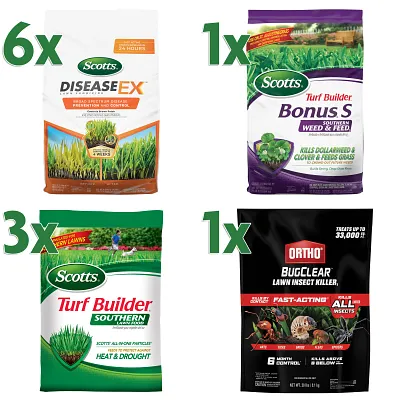
Before we dive into the calendar, let's simplify your shopping list. Instead of guessing which bag to grab from the shed, we’ve curated everything you need into one kit: The ProVista St. Augustine Annual Maintenance Bundle. This curated bundle, designed for lawns between 8,000-10,000 sq. ft., includes the lawn food and protection for each season, shipped all at once.

When the frost clears and you see green popping up, your lawn is waking up from its winter nap. It’s hungry and ready to grow.
Dust off the mower and sharpen the blade. Once your St. Augustine grass is actively growing, you’ll need to start mowing more regularly to maintain your desired lawn height and appearance.
Spring feeding is a two-step process to jumpstart the season:
Aim for about 1 inch of water per week. If Mother Nature brings the rain, you can keep the irrigation system off. Be sure to check your soil moisture on a regular basis and adjust your irrigation schedule as needed. Always follow and obey any watering restrictions in your area.
As the soil warms up in the spring, nature’s little annoyances wake up too.

Summer is when your ProVista St. Augustine lawn shines staying dense and manageable in the summer heat.
Keep your mower deck high—3 to 4 inches high is the goal. Taller grass shades the soil so it can hold on to water better, keeping it cooler. Bonus: ProVista St. Augustine grows slower, so you won’t be sweating behind the mower nearly as often as your neighbors.
A third feeding with a southern lawn food in early summer (at least 6-8 weeks after your late spring feeding) helps strengthen your ProVista St. Augustine turf so it can withstand the heat and drought conditions that summers in the South are famous for.
Stick to the 1 inch per week rule. Deep, infrequent watering is better than a light sprinkling every day. It encourages the roots to dig down deep for moisture.

Keep mowing your ProVista St. Augustine lawn at 3 to 4 inches tall until the grass goes dormant.
A fourth and final feeding of the season with a southern lawn food in mid- to late-September will help your ProVista lawn recover from summer stresses and build a strong root system before the dormant winter period. Make sure you make this application at least 6 weeks before the first expected fall frost date in your area.
Continue giving your lawn about 1 inch of water per week either through irrigation or Mother Nature. Check the soil moisture regularly to prevent overwatering. The changing seasons may mean adjusting your irrigation schedule.
It’s time to hang up the “Do Not Disturb” sign. In many areas, your ProVista St. Augustine lawn will go dormant (turn brown) or semi-dormant. This is a natural process, and your lawn’s way of protecting itself from the cold. Mowing and watering should be reduced to an “as needed” basis. Lawn weed, disease, and insect problems should be minimal, but keep an eye out for problems and treat as needed.