




Update Location
Enter a ZIP code to get product recommendations and information tailored to your area.

Keep your holiday poinsettia bright and beautiful through the new year—and even bring it back to color next December.
Poinsettias are the bright red, pink, white, and marbled plants that fill stores every December. People love them because nothing says “holidays” quite like a pot of vivid poinsettia color on the mantel or table. The key to keeping one looking great is simple: give it bright light, keep it warm and away from drafts, and water only when the soil surface feels dry—and never let it sit in a foil wrapper full of water.
Key Takeaways
In This Article: Poinsettia Care at a Glance · How Do You Pick a Healthy Poinsettia? · Where Should You Put a Poinsettia? · How Often Should You Water a Poinsettia? · Do Poinsettias Need Plant Food? · What Should You Do With a Poinsettia After the Holidays? · How Do You Get a Poinsettia to Turn Red Again? · What Are the Most Popular Poinsettia Colors and Varieties? · Are Poinsettias Poisonous to Cats, Dogs, and People? · Why Are My Poinsettia’s Leaves Falling Off? · Poinsettia FAQs
Poinsettias are tropical shrubs that hold their holiday color for 6 weeks or more when kept in bright light, at room temperature, and in evenly moist (never soggy) soil.
| Attribute | Description |
|---|---|
|
Botanical name |
Euphorbia pulcherrima |
|
Also called |
Christmas star, Christmas flower |
|
Plant type |
Tropical flowering shrub (grown as a holiday houseplant) |
|
Mature size indoors |
Usually 1-3 ft tall as sold; larger if kept for years |
|
Growth rate |
Moderate in spring and summer |
|
Light exposure (best) |
Bright, indirect light |
|
Light tolerance |
Medium to bright; avoid harsh direct sun on the colored bracts |
|
Water needs |
Moderate; water when the soil surface feels dry |
|
Ideal temperature |
65-70°F days, around 60°F nights; keep above 50°F |
|
Ideal humidity |
Average home humidity is fine |
|
Soil type |
Well-draining indoor potting mix |
|
Soil pH |
About 5.5-6.5 |
|
Fertilizer |
Balanced liquid indoor plant food once new growth begins |
|
Bloom time |
Colored bracts November-January; color lasts 6 weeks or more with good care |
|
Toxicity |
Mildly toxic to cats and dogs; sap can irritate skin |
Garden Library
Bract: a modified leaf. The red, pink, or white “petals” of a poinsettia are actually bracts. The true flowers are the tiny yellow buds (cyathia) in the center.
Choose a poinsettia with fully colored bracts, dark green leaves all the way down the stems, and tight, unopened yellow flower buds in the center. Those tiny buds are a sign the plant is fresh and will hold its color longer. Skip plants that are wilting, dropping leaves, or crowded together in plastic sleeves on the store shelf.

Put your poinsettia in a bright spot near a sunny window, where it gets at least 6 hours of bright, indirect light a day. Keep the room between 65°F and 70°F during the day and around 60°F at night. Slightly cool nights help the color last longer, while hot, dry air and cold drafts shorten its show.

Water your poinsettia whenever the soil surface feels dry to the touch—usually every few days to once a week, depending on pot size and how warm your home is. Water thoroughly until it drains from the bottom, then empty any water that collects. Poinsettias wilt quickly when dry but rot just as fast in soggy soil.

No. Not while it’s in full holiday color. Your poinsettia was well fed in the greenhouse and has what it needs to hold its bracts through the holiday season. Start feeding once you see new green growth, usually in late winter or spring, if you’re keeping the plant as a houseplant.
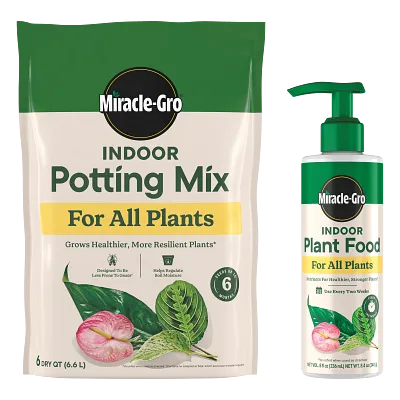
When it’s time, Miracle-Gro Indoor Plant Food for All Plants is a gentle, balanced 1-1-1 NPK liquid formula that helps houseplants grow healthier and stronger (vs. unfed when used as directed). Feed every 2 weeks, following the label directions.
You can treat your poinsettia as seasonal décor and compost it once it fades, or keep it as a green houseplant all year. With the right timing, you can even get it to color up again next December. Keep it in bright light and water as usual until the bracts fade, usually by late winter, then follow this schedule.
Poinsettias color up in response to long nights. Starting around October 1, give your plant 14 hours of complete, uninterrupted darkness every night and bright light during the day for 8-10 weeks. When the bracts show strong color, usually in early December, you can stop the darkness treatment and display it.

Poinsettias come in more than 100 varieties, and all of them share the same care. The differences are mostly color and bract shape.
Painted and glittered poinsettias are dyed white plants. They’re fine for one season of décor, but the paint can block light on the bracts.

Poinsettias are mildly toxic, and their reputation is overstated. According to the ASPCA, the milky sap is irritating to the mouth and stomach and can cause vomiting in pets, but serious poisoning is rare. Still, it’s best to keep the plant out of reach of pets and young children.
If ingestion occurs or symptoms persist, contact your veterinarian or Poison Control.
Poinsettias usually drop their leaves because of a cold draft, a sudden temperature change, or watering problems—either letting the soil dry out until the plant wilts, or leaving it sitting in water. Move the plant away from doors, windows, and heat vents, and water only when the surface feels dry. A few lower leaves yellowing and dropping late in the season is normal.
| Symptom | Most likely cause | How to fix it |
|---|---|---|
|
Leaves suddenly dropping |
Cold drafts, temperature swings, or a cold trip home |
Move to a stable, warm spot away from doors and vents |
|
Yellow lower leaves |
Overwatering or too little light |
Let the soil surface dry; move closer to a bright window |
|
Wilting with dry soil |
Underwatering |
Water thoroughly at the sink and let it drain |
|
Wilting with wet soil |
Root rot from soggy soil or a water-filled sleeve |
Remove the foil; let the soil dry; water less often |
|
Bracts fading or falling |
Natural end of the season, or heat |
Normal by late winter; cooler nights help color last |
|
No color next year |
Light at night during fall |
Give 14 hours of total darkness nightly from October 1 |
Whiteflies are the most common poinsettia pest. Look for tiny white insects that flutter up when you touch the plant, plus sticky residue on leaves. Fungus gnats can also show up in soil that stays wet. Rinse leaves with lukewarm water, use a houseplant insect spray labeled for whiteflies, and let the soil dry between waterings to discourage gnats. Always follow label directions.
With good care, poinsettias hold their color for 6 weeks or more, often well into January or February. Bright light, warm days, slightly cooler nights, and careful watering help the color last as long as possible.
In frost-free areas (USDA zones 10-11), poinsettias can grow in the ground as shrubs. Everywhere else, they can spend summer outdoors in a pot but must come inside before nights drop below 55°F.
Yes, or at least poke holes in the bottom. Decorative foil traps water around the roots, which quickly leads to root rot. Remove the foil to water, let the pot drain, and then replace it if you like the look.
Yes. After the bracts fade, cut it back, repot it in spring, and grow it in bright light like any other houseplant. It will stay green unless you give it the fall darkness treatment to bring back its color.
Drooping is usually a watering issue. If the soil is dry, water thoroughly and the plant should perk up within hours. If the soil is wet, the roots may be rotting from sitting in water, so remove any foil and let the soil dry out.