




Update Location
Enter a ZIP code to get product recommendations and information tailored to your area.

House flies can spread disease and multiply before you know it. Here's how to stop an infestation.
It happens to the best of us. You’re tired from a long day of hosting a summer party, and you forget to put a few leftovers away before going to bed. The next morning, you walk into the kitchen to find a buzzing cloud of house flies helping themselves to the food
While they are one of the most common pests, house flies are certainly not harmless. Because they can spread filth and disease, it is important to take control of the situation quickly. Here is what you need to know about killing flies indoors and keeping them from coming back.

To solve the problem, it helps to understand what draws them in. House flies are constantly on the lookout for two things: food and a warm place to lay their eggs.
The life cycle of a house fly is short—ranging from 14 to 25 days—but they move fast. They look for moist, warm areas to lay eggs, which can hatch into larvae (maggots) in as little as 12 hours. These maggots feed on their surroundings for a few days before emerging as adult house flies.
Indoors, your home can offer a buffet of food sources, including uncovered trash, pet food, and kitchen leftovers. Since they fly, it’s easy for them to slip inside while you’re carrying in groceries or enjoying a breeze through an open door.
When you have an infestation, you want a solution that works fast. The best way to kill house flies involves a combination of direct control and strategic baits.
For immediate results, the simplest method is to use a spray to kill flies on contact. Look for an insect control product specifically labeled for house flies and apply it directly when you see them. Always follow the label directions carefully.
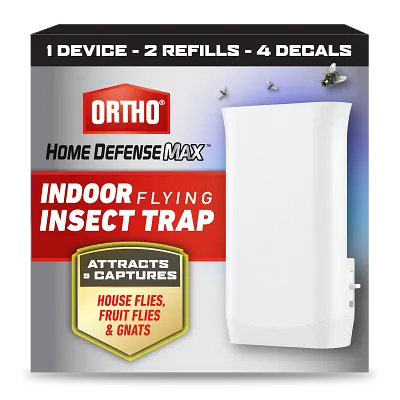
Sprays are excellent for the flies you can see, but for the ones you can't, a trap is your best ally. A plug-in light trap uses blue light to draw flies away from main living areas, while more traditional sticky traps work well near potted plants. This helps ensure you catch any stragglers that could restart the cycle.
If you are facing a heavy infestation that sprays and traps can't handle alone, you might need to release a fogger. These fill the room with a fine mist to control flies on contact. Always be sure to follow the label directions carefully, specifically regarding vacating the area and ventilating the room afterwards.
Once you have handled the immediate issue, the next step is prevention. Learning how to get rid of house flies indoors for good requires a few simple changes to your routine and home maintenance.
The first step to preventing a house fly infestation is to remove their food source.
House flies are small and can enter through tiny cracks. Inspect your home to make sure they can't get in:
You can stop flies before they even make it inside. Apply an insect barrier around your home’s perimeter (kitchens, bathrooms, doors, and windows) to create a shield that deters flies—and other listed insects—from entering.
To help stop them at the source, you can treat your lawn and landscape with an insect killer labeled for house flies. This controls insects in your yard before they have a chance to find their way indoors.
Keeping house flies out is easier than it might seem. By sealing up entry points, removing food sources, and using the right control products, you can get back to enjoying a fly-free home.