




Update Location
Enter a ZIP code to get product recommendations and information tailored to your area.

Summer should be the season you actually enjoy your lawn - backyard cookouts, kids running through the sprinkler, Saturday afternoon lounging in the shade. But for your grass, summer can be the hardest time of year. Heat, drought, foot traffic, insects, and weeds all pile on at once, and without the right care, even a healthy lawn can start to struggle.
The good news: summer lawn stress is manageable. With a little know-how, you can recognize the early warning signs, take steps to prevent stress before it starts, and nurse your lawn back to health if it's already struggling—all while still getting outside and enjoying your yard.
Summer lawn stress rarely has a single cause. It's usually a combination of factors hitting your lawn all at once.
Heat and Drought
Most cool-season grasses like Kentucky bluegrass, fescue, and ryegrass prefer temperatures between 60°F and 75°F. When temps climb above 90°F for extended periods, grass slows its growth dramatically and begins using water faster than roots can absorb it. Warm-season grasses like bermudagrass and zoysia handle heat better, but they're still vulnerable during extreme drought conditions.
Foot Traffic
Your lawn is built to be used, and it can handle a reasonable amount of activity. But during dry, hot weather, repeated foot traffic becomes a compounding stressor. When grass is well-watered, blades spring back up after being stepped on. When it's dry, they stay flattened and can be damaged.
Insects and Weeds
A weakened lawn is an open invitation. Grubs, chinch bugs, armyworms, and other lawn pests are most active in summer, and a heat-stressed lawn is less capable of fending them off. Weeds also take advantage of thin, stressed turf. Bare or weak spots are prime real estate for crabgrass and other summer weeds to move in.
Catching stress early makes recovery much easier. Here's what to look for:
The Footprint Test
This is the simplest and fastest diagnostic tool available. Walk across your lawn, then look back. If the grass springs back up within a few minutes, your lawn has adequate moisture. If your footprints stay visible (flattened and dull grass) your lawn is stressed and likely needs water.
Color Changes
A healthy lawn is vibrant green. A stressed lawn changes color in stages. First, it may shift to a dull, blue-gray or grayish-green; this is an early warning sign that the grass is conserving moisture. If the stress continues, it progresses to yellow and then to brown. If you notice blue-gray patches, don't wait: that's your lawn asking for help.
Brown Patches
Brown patches during summer can mean a few different things: drought stress, disease, insect damage, or lawn burn. Location is a clue: patches near pavement, on slopes, or in full-sun areas are most likely heat and drought stress, since those spots lose moisture fastest. Patches that appear suddenly after rain or in shaded areas may indicate a fungal disease. When brown patches are spreading quickly (more than a few inches per day), it's worth looking more closely at what's driving it.
Dormancy vs. Damage
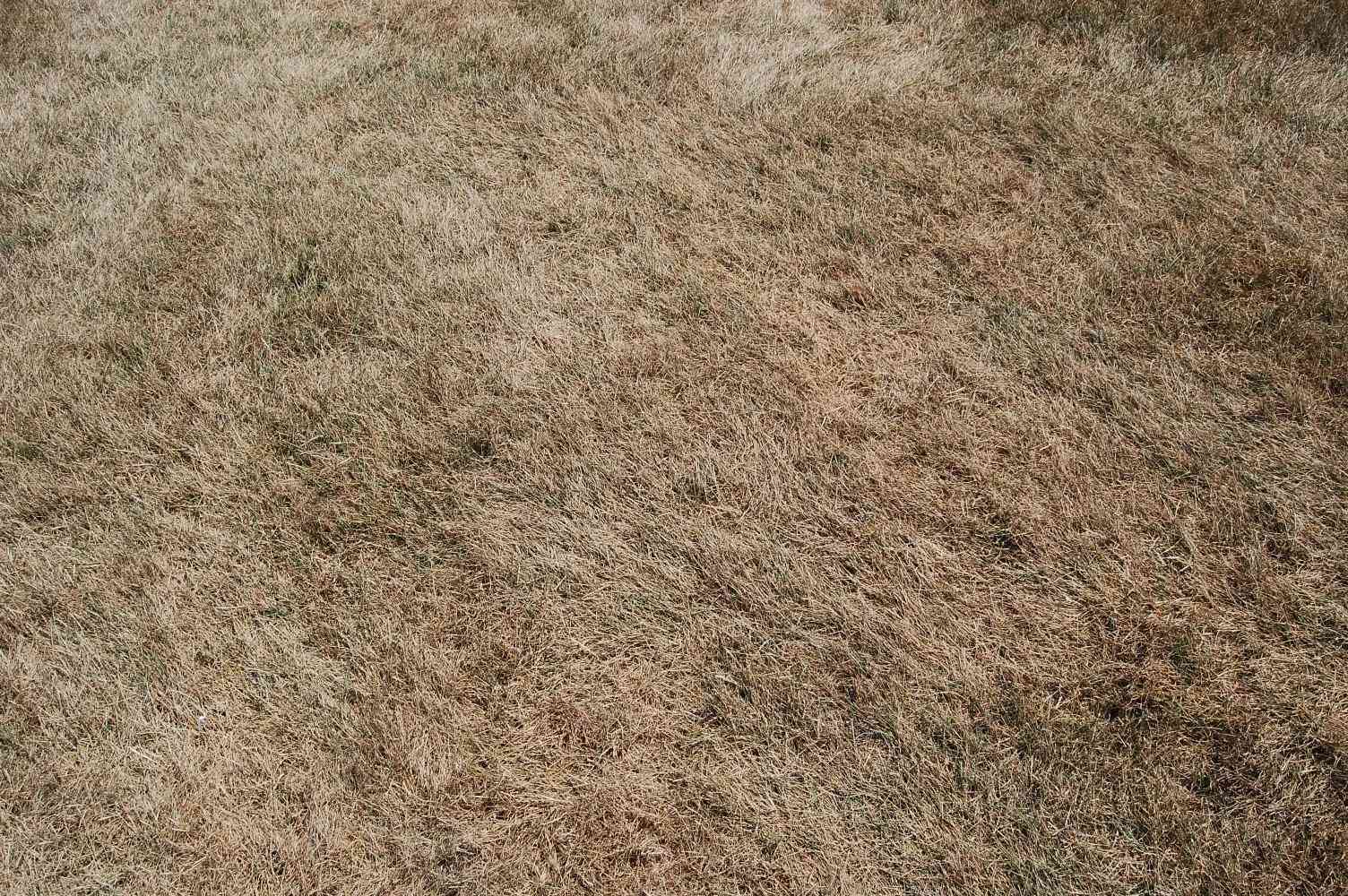
Here's an important distinction: a dormant lawn is not a dead lawn. When conditions become extreme, grass naturally enters dormancy essentially hitting the pause button on active growth to conserve energy and survive. A dormant lawn will typically look uniformly tan or brown and will green up again when rain returns or watering resumes. A dead lawn won't recover. If you're not sure which you're dealing with, try watering consistently for a week or two. Signs of green emerging are a good signal that dormancy, not death, is the issue.
The best defense against summer lawn stress is preparation and consistent care. These practices build a resilient lawn before the heat hits and keep it that way all season long.
Water Deeply and at the Right Time
Watering deeply but infrequently trains grass roots to grow down into the soil, where moisture is more stable. Frequent shallow watering does the opposite, keeping roots close to the surface where they're vulnerable to heat and drying out quickly. Aim for about ½ inch of water twice a week, or 1 inch total per week. A simple rain gauge or tuna can placed in your yard can help you measure how much you're putting down.
Timing matters as much as amount. Water between 6 a.m. and 10 a.m. Early morning watering reduces evaporation loss and allows grass blades to dry before nightfall. Wet grass at night is an open door for fungal disease. Afternoon watering wastes water to evaporation. Evening watering invites disease. Morning is always the right answer.
Mow High with a Sharp Blade
During summer, raise your mower deck to one of its highest settings. Taller grass shades the soil, keeping it cooler and reducing evaporation. It also protects the crown of the grass, the growing point at the base of each blade, from scorching sun exposure. Most grass types thrive when kept at 3 to 4 inches during summer months.
Blade sharpness matters too. A dull mower blade tears and shreds grass rather than cutting it cleanly. Shredded tips turn brown and create more surface area for moisture to escape. A clean, sharp cut heals faster and keeps your lawn looking its best.
Feed Your Lawn Smarter This Summer
Here's where a lot of homeowners get tripped up, and old advice sometimes sends the wrong message. The concern about summer feeding isn't that you shouldn't fertilize in summer; it's that you need to use the right kind of fertilizer.
Traditional, agricultural-grade, quick-release fertilizers can overwhelm grass during hot weather, causing fertilizer burn and flushing nutrients through the soil before your lawn can use them. That's a real concern. But slow-release fertilizers work completely differently. Products like Turf Builder Lawn Food use a mix of fast- and slow-release nitrogen to feed your lawn consistently over 6 to 8 weeks. The nutrients are released gradually as soil microbes break them down, so your lawn gets what it needs, steadily, without the surge-and-crash of quick-release formulas.
Turf Builder SummerGuard is specifically formulated for the summer months (June through August). It feeds your lawn for up to 8 weeks and simultaneously protects against common summer pests like chinch bugs, ants, armyworms, fleas, and ticks. Because it's slow-release, it delivers nutrients steadily even during hot weather, building deeper roots and drought-tolerant grass without the risk of burn.
A few ground rules for summer feeding:
If your lawn is actively growing and showing good color, go ahead and feed it. A well-nourished lawn is better equipped to handle summer stress. The goal is to feed it before it becomes stressed, not to withhold feeding as a precaution.
Manage Foot Traffic Wisely
Your lawn is meant to be enjoyed - that's the whole point of having it. The key is knowing when and how your lawn handles activity best.
When it's okay to enjoy your lawn: A healthy, well-watered lawn can handle normal recreational use - kids playing, weekend gatherings, lawn games, and regular foot traffic. Well-hydrated grass bounces back quickly. If your lawn passes the footprint test (blades spring back up), it's in good shape for activity.
When to ease up: During extended heat waves when your lawn is visibly stressed or has gone brown, minimize unnecessary foot traffic. Dry, stressed grass blades are more fragile and can be damaged by pressure that a healthy lawn would shrug off.
If you have areas of your yard that receive heavy, repeated traffic—a path between the garage and backyard gate, or a shortcut across the lawn—consider adding stepping stones or a defined pathway. This keeps foot traffic concentrated in one place and protects the surrounding turf.

Water Consistently and Deeply
If your lawn has gone brown or dormant from drought, the most important step is consistent, deep watering. Don't try to revive it with a flood; resume your regular watering schedule and let it recover gradually. For a dormant lawn, it may take two to three weeks of regular watering before you see green re-emerging from the crown.
Hold Off on Fertilizing Until It Recovers
If your lawn is visibly struggling—wilted, heavily browned, or in full dormancy—this is not the time to fertilize, regardless of the product type. A lawn in distress isn't actively growing, which means it can't use nutrients effectively. Wait until the lawn shows signs of recovery (new green growth, blades bouncing back) before resuming feeding.
Once conditions improve and your lawn starts greening up again, feed it to support recovery. Feeding helps replenish nutrients and encourages the root development your lawn needs to bounce back stronger.
Raise Your Mowing Height
If you've been mowing short, raise your deck. Taller grass will help shade and protect recovering turf, and reducing the stress of additional cutting will allow the plant's energy to go toward root and blade recovery.
Be Patient
A stressed lawn recovers on its own schedule. Cool-season grasses will often come back naturally when fall temperatures arrive, even if they looked completely brown in August. Warm-season grasses may green back up as soon as consistent watering resumes. Give your lawn time, don't overwater in a panic, and resist the urge to pile on treatments all at once.

Aerate to Relieve Compaction
Core aeration—pulling small plugs of soil out of the ground—opens up the root zone to air, water, and nutrients. It's one of the best things you can do for a lawn that sees regular foot traffic or has clay-heavy soil prone to compaction. The ideal time for cool-season grasses is fall; warm-season grasses benefit from spring aeration when they're actively growing.
Overseed in the Fall
If your cool-season lawn struggles every summer with heat and drought, fall overseeding with a more resilient grass variety can make a meaningful difference. Drought Tolerant Mix grass seed is designed to maintain color and density even in scorching heat and drought conditions and spreads to fill bare spots on its own.
Consider a Low-Maintenance Lawn
If you're establishing a new lawn or renovating an existing one, it's worth thinking long-term about resilience. A strawberry clover lawn is a naturally drought-tolerant option with deep roots that reach soil moisture levels traditional grass can't access. It requires less frequent watering, stays greener longer during dry periods, and self-fertilizes when clippings are left on the lawn. It's a smart choice for homeowners who want a sustainable, lower-maintenance alternative that’s good for the environment and for your water bill.

A dormant lawn goes brown uniformly and stops growing, but it's still alive. The crown of the grass plant (at soil level) remains viable and will green up when conditions improve. A dead lawn won't recover with watering. If you're unsure, resume regular watering for one to two weeks. New green growth emerging from the base of the plant is a reliable sign of dormancy rather than death. A uniformly tan lawn that's been without rain or irrigation for 4 to 6 weeks in summer is most likely dormant.
Yes - with the right product and at the right time. Slow-release lawn fertilizers, like Turf Builder SummerGuard which feeds the lawn and controls listed insects including ticks, are specifically formulated for summer application and feed gradually over 6-8 weeks without the burn risk of quick-release formulas. The long-held rule of avoiding summer fertilizing applies primarily to quick-release, high-nitrogen products. Always water your lawn 24 hours before applying fertilizer, and avoid feeding during periods of active stress or drought dormancy. A healthy, actively growing lawn benefits from summer feeding.
Most lawns need about 1 inch of water per week during summer split into two applications of approximately ½ inch each. Water deeply to encourage roots to grow down rather than staying close to the surface. Water in the morning (between 6 a.m. and 10 a.m.) to reduce evaporation and minimize disease risk. During extreme heat waves, your lawn may need a little more, especially if it's showing early signs of stress like the blue-gray color change or footprints that don't bounce back.
Absolutely! Your lawn is made for living on. A healthy, well-watered lawn handles normal recreational use without a problem. The key is to avoid intense foot traffic during the hottest, driest stretches when your grass is already under stress. Use the footprint test: if the grass springs back after you step on it, you're good to go. After applying Turf Builder Lawn Food, kids and pets can return to the lawn as soon as the product has been watered in and the lawn is dry. Always check the product label for specific guidance.
That blue-gray or grayish-green color is one of the first visible signs that your lawn is under drought stress. It happens because the grass is beginning to fold or roll its blades slightly to conserve moisture, reducing the surface area exposed to sun and wind. It's an early warning sign, not a death sentence. If you don’t want your lawn to go dormant, water your lawn deeply as soon as you see it change colors. If you catch it at this stage, you can usually bring your lawn back quickly before it progresses to full dormancy or browning.
With the right care (smart watering, proper mowing, slow-release feeding, and knowing when to ease up on foot traffic) your lawn can make it through the summer looking great. And the best part: when you set it up for success, you spend more time enjoying your yard and less time worrying about it.