




Update Location
Enter a ZIP code to get product recommendations and information tailored to your area.

If your lawn is thick and green through the hottest part of summer but browns out after the first cold snap, you're growing a warm-season grass. This category covers most lawns across the southern Transition Zone and South, and it works on the opposite calendar from cool-season grasses: summer is the growing season, and winter is a period of rest but not a die-off.
Warm-season grasses are grass types that originate from tropical and subtropical regions and thrive in Southern heat, growing most actively when the air temperature is between about 75-90°F, with peak growth in summer. They go dormant (turning brown) once cooler fall and winter weather sets in, then green back up as spring warmth returns.
Warm-season grass: a grass type adapted to grow most actively in hot weather, roughly 75-90°F, with peak growth in summer and natural dormancy (browning, not dying) in cold weather. Warm-season grasses include seed-grown types like Bermuda and Centipede as well as plug- or sod-grown types like St. Augustine.
Warm-season grasses cover most of the southern US, though exactly which type depends on soil and climate. Bahiagrass and St. Augustinegrass favor the sandy, salt-exposed soils of the Gulf Coast (St. Augustine also grows well in Southern California). Bermudagrass and zoysiagrass spread throughout the South and into the Transition Zone. Centipedegrass is concentrated in the Southeast as a lower-maintenance option.

Transition Zone: a wide band across the middle of the US (roughly Kansas through the Mid-Atlantic) where summers are hot enough to stress cool-season grass and winters are cold enough to stress warm-season grass. Homeowners can often grow grass types from either category.
Five grasses make up nearly every warm-season lawn, each suited to a different climate, soil type, and maintenance level. Each has a full grow guide with care steps.
Bermudagrass
Bermuda grass has fine-to-medium, deep-green blades forming a dense, wear-resistant turf that spreads aggressively via both above- and below-ground runners. It’s the go-to choice for full-sun Southern lawns that see heavy use.
See the full guide: How to Plant and Care for a Bermuda Grass Lawn.

St. Augustinegrass
St. Augustine has broad, coarse, blue-green blades that form a thick carpet. It is well-suited to hot, humid climates and coastal, salt-exposed yards where other grasses struggle. St. Augustine, and the popular variety Floratam, are established from plugs, sprigs, or sod rather than seed.
See the full guide: How to Plant and Care for a St. Augustine Grass Lawn.

Zoysiagrass
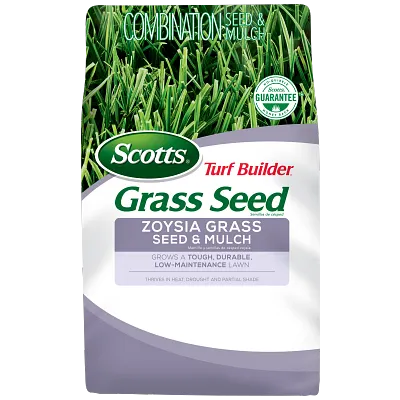
Zoysia grass has fine-to-medium, stiff, prickly-soft blades that form one of the densest turfs of any lawn grass. It’s slow to establish, but very durable and drought-tolerant once it fills in.
See the full guide: How to Plant and Care for a Zoysia Grass Lawn.

Centipedegrass
Centipede grass has light-to-medium green, coarse blades forming a low, even, low-maintenance turf. It needs less mowing and feeding than the other warm-season types and is well-suited to the acidic, sandy soils common across the Southeast.
See the full guide: How to Plant and Care for a Centipede Grass Lawn.

Bahiagrass
Bahia grass has coarse, open-textured, lighter-green blades forming a looser turf. It tolerates poor, sandy, acidic soil and drought better than most lawn grasses and is a popular low-maintenance choice for Gulf Coast yards.
See the full guide: How to Plant and Care for a Bahia Grass Lawn.

Warm-season grass turns brown in winter because it's going dormant, not dying. It's a normal, healthy response to cold temperatures that conserves the plant's energy until warm weather returns. Dormancy typically sets in once temperatures consistently drop below 55-60°F, and the grass will green back up on its own each spring without needing to be replanted.
The most common way to keep a warm-season lawn green through winter is overseeding it with a cool-season grass—usually annual or perennial ryegrass—in early fall. The ryegrass germinates quickly, stays green through the cold months while the warm-season grass is dormant, and then dies back naturally as spring heat returns, letting the warm-season lawn resume growth. See How to Seed a Dormant Lawn in Winter for guidance.
The Transition Zone is a wide band across the middle of the US where both warm-season and cool-season grasses grow. Summers are hot enough to stress cool-season grass while winters are cold enough to stress most warm-season grass. Bermuda, centipede, and zoysia tend to handle Transition Zone winters better than other warm-season types, but all of them will typically turn brown below 60°F.
Most warm-season grasses can survive typical winters in their growing region just fine; they simply go dormant rather than dying. The risk is an unusually hard freeze outside the grass's normal range, or repeated hard freezes on a lawn that's already stressed. Bermuda, zoysia, and centipede are the most cold-tolerant of the five warm-season grass types, which is why they're the ones found furthest north into the Transition Zone.
Warm-season grass grows most actively in summer heat and goes dormant (brown) in cold weather; cool-season grass grows most actively in spring and fall and stays green through most winters. Which one you have — or should plant — mostly comes down to where you live. See Identify Your Grass Type to confirm which category your lawn falls into, or What Are Cool-Season Grasses? for the cool-season profiles.