




Update Location
Enter a ZIP code to get product recommendations and information tailored to your area.

Plants get hungry, too. Here's when to start feeding, how often to keep it up, and when to let them rest.
You picked the sunny spot, tucked your plants into good soil, and watered them in. Now comes the part that's easy to forget: feeding. Plants pull nutrients from the soil every day they're growing, and over the season, those nutrients run low if they’re not replenished. Knowing when to feed your outdoor plants, and how often, is one of the simplest ways to get stronger roots, more blooms, and a bigger harvest.
Key Takeaways
In this article
Outdoor plants need plant food because the soil they grow in loses nutrients over time. Roots take up nutrients as plants grow, and rain and regular watering carry more away. Feeding replaces what's been used so your plants can keep building strong roots, healthy leaves, and plenty of flowers and fruit. Well-fed plants are also more resilient when heat, dry spells, or pests show up.
Garden Library
Plant food (fertilizer): a product that supplies the nutrients plants need to grow. "Plant food" and "fertilizer" mean the same thing; you'll see both on labels.
N-P-K: the three numbers on every plant food label, showing the percentage of nitrogen (N), phosphorus (P), and potassium (K). Want the deep dive? See NPK: The Golden Ratio of Plants.
| Nutrient | What it does for your plants |
|---|---|
|
Nitrogen (N) |
Fuels green, leafy growth and stems |
|
Phosphorus (P) |
Supports root development, flowers, and fruit |
|
Potassium (K) |
Helps plants handle stress like heat, drought, and disease |
Start a regular feeding routine for annual flowers, vegetables, and herbs within the first few weeks after planting. These plants grow fast and use nutrients quickly, especially once they start blooming and setting fruit, so steady feeding from early on keeps that growth going. If you planted in a soil or potting mix that contains plant food, begin your routine no later than about 30 days after planting.
Yes. A soil or potting mix with plant food gives new plants a great boost of nutrients right at the roots, which helps them settle in and build strong roots. Think of it as a strong start, not a full season of nutrition. Annual plants are busy all season long, putting out new leaves, flowers, and fruit, and a regular feeding routine is what keeps them productive from spring through fall.
Before you add plant food, check the directions on both your soil bag and your plant food label, and follow whichever timing they give.


Not sure which soil to start with? See Best Soil to Use in Containers and Raised Beds.
Feed established trees and shrubs in early spring, as new growth begins, and again in fall. Perennials get their first feeding in early spring, when new shoots appear.
For trees and shrubs, plant food spikes placed along the dripline are the simplest way to get nutrients down to the active feeder roots. Miracle-Gro Tree & Shrub Plant Food Spikes release nutrients slowly, so one feeding in spring and one in fall covers the year.
Spikes are made for trees and shrubs planted in the ground. For perennials, or shrubs in containers, a granular plant food worked lightly into the top inch or so of soil works well. Keep it off stems and new shoots, then water it in.
Garden Library
Dripline: the circle on the ground directly below the outermost branches of a tree or shrub. Feeding there puts nutrients where the most active roots are, not right against the trunk.
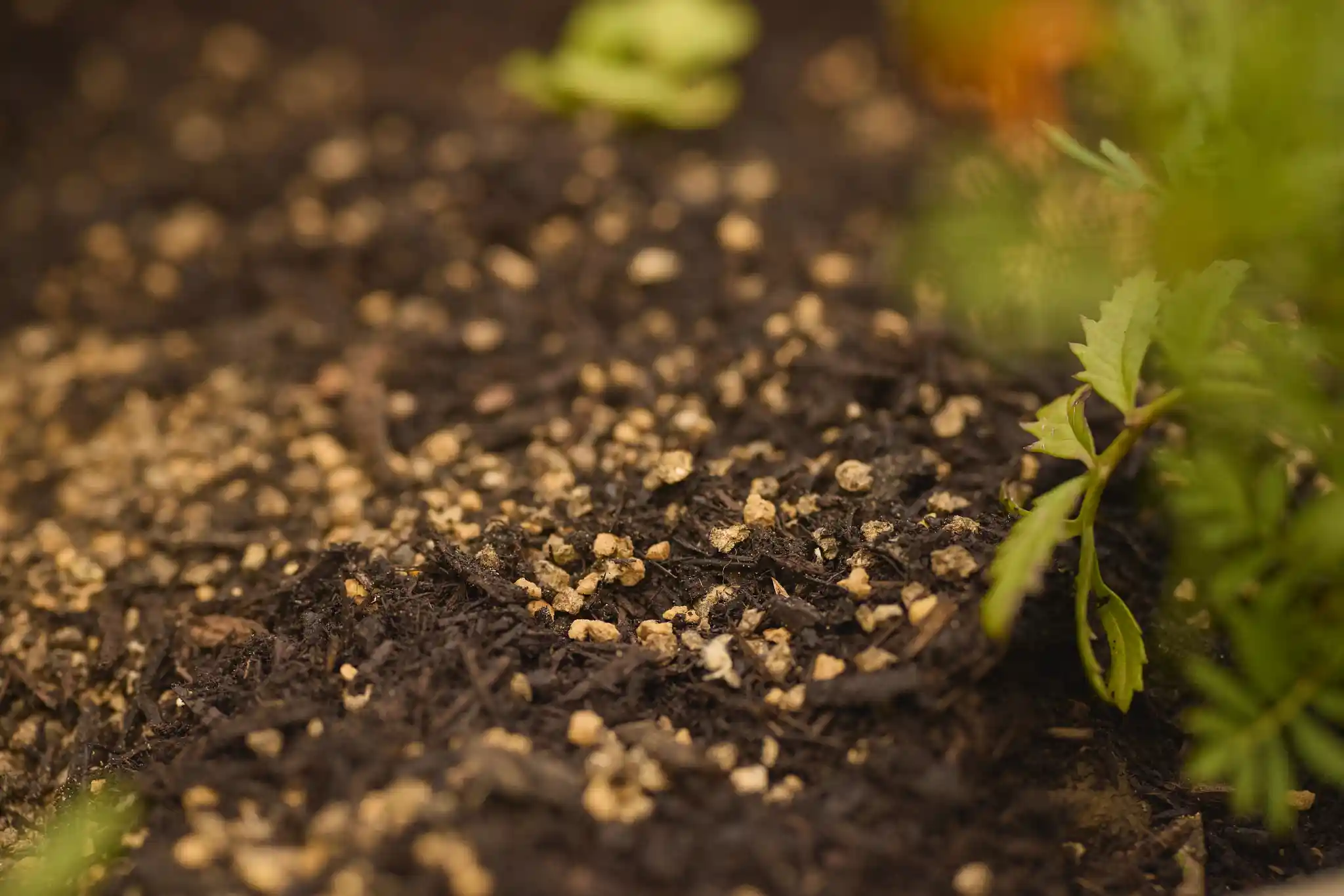
How often you feed depends on the type of plant food you use. Liquid and water-soluble plant foods feed right away but don't last long, so they're reapplied every 7 to 14 days. Granular, continuous-release plant foods break down gradually, so they're applied less often, anywhere from every few weeks to every few months depending on the product and where you're growing. The label is always your best guide.
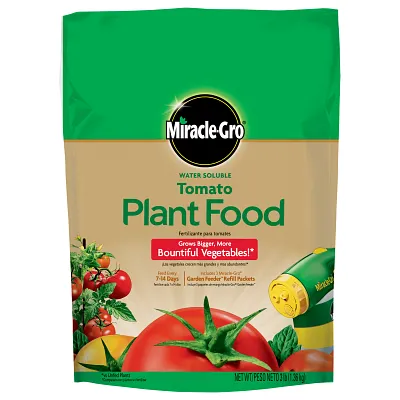
| Type of plant food | How it works | How often to feed | Example |
|---|---|---|---|
|
Water-soluble powder |
Mix with water; feeds instantly |
Every 7–14 days |
|
|
Organic liquid concentrate |
Mix with water; feeds instantly |
Every 7–14 days |
Miracle-Gro Organic Liquid Plant Food (OMRI Listed for organic use) |
|
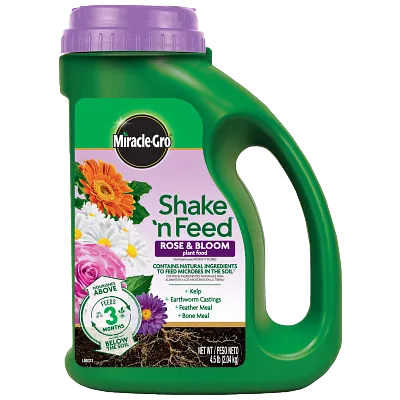
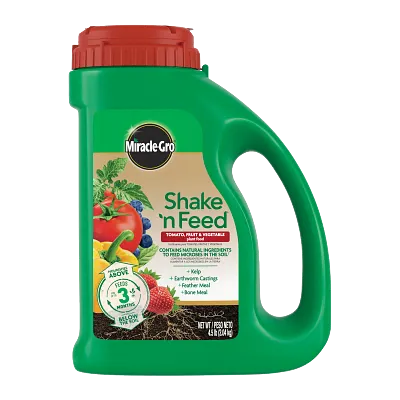
Continuous-release granules |
Shake on, mix in, water; feeds over time |
Up to 3 months per feeding |
|
|
Organic granules |
Shake on, mix in, water; feeds over time |
Up to 3 months per feeding (every 4 weeks in-ground is recommended) |
Miracle-Gro Organic All Purpose Plant Food (OMRI Listed for organic use) |
|
Plant food spikes (trees and shrubs) |
Tap into the ground at the dripline; releases slowly |
Once in spring, once in fall |
Yes, in most cases. Potted plants have a limited amount of soil to draw from, and every time you water until it runs out the drainage hole, some nutrients leave with it. In the heat of summer, when containers may need water every day, nutrients run low even faster. Stick closely to the label schedule growing in containers, and don't stretch the time between feedings.
Yes. Summer is when many vegetables and flowers put on their biggest growth spurts and start setting fruit, so steady feeding through the season keeps them productive. The one exception is a plant that's wilted from dry soil: water it first and let it recover, then feed. Feeding a thirsty, stressed plant can do more harm than good.
If you live where the ground freezes in winter, give annual flowers, vegetables, and perennials their last feeding in late summer to early fall, about 6 to 8 weeks before your first expected frost. Plant food encourages new growth, and tender new growth late in the season is easily damaged by cold. Perennials also need time to slow down and prepare for dormancy.
Trees and shrubs are the exception when you're using a product labeled for fall feeding, like plant food spikes. Apply them in fall as the label directs, once top growth has slowed. Fall feeding supports roots heading into winter and gives trees and shrubs a head start in spring.
In warmer regions where the ground doesn't freeze, keep feeding annual flowers and cool-season vegetables that are actively growing through fall and winter. Pause feeding perennials that go dormant, and follow the label for trees and shrubs.
The right plant food is the one that fits how you like to garden. If you enjoy a regular watering-can routine, a feed-instantly plant food works well. If you'd rather feed less often, a continuous-release granular food does the work over weeks or months. Both are available in conventional and organic forms, and an all-purpose formula covers most mixed gardens.
Both approaches give plants the nutrients they need. The difference is how the nutrients are delivered and how often you'll be out there feeding.
Some gardeners use both: granules as a steady base, with a liquid feeding for an extra boost when plants are flowering or fruiting. If you choose to do both, follow each label's rates so you don't overdo it.

Yes. Organic plant foods feed your plants with nutrients from naturally derived ingredients, and they come in the same two forms as conventional plant foods. Miracle-Gro Organic Liquid Plant Food is made from 94% plant-based fertilizer ingredients and feeds instantly. Miracle-Gro Organic All Purpose Plant Food is a granular formula made with ingredients like feather meal, soybean meal, and bone meal, and feeds over time.
Both Miracle-Gro Organic Liquid Plant Food and Miracle-Gro Organic All Purpose Plant Food are OMRI Listed for organic use. To learn more about what OMRI Listed means, see our article What Is OMRI and What Does OMRI Listed Mean?
Garden Library
OMRI Listed: the Organic Materials Review Institute (OMRI) independently reviews fertilizers, soils, and other garden products against USDA organic production standards. Products that pass can carry the OMRI Listed seal.

Curious how the Miracle-Gro organic formulas compare? See Why Choose Miracle-Gro Organic Plant Food?
An all-purpose plant food is a solid choice for most gardens, especially if you grow a mix of vegetables, herbs, and flowers. If your garden only has vegetables or flowers, a specialty formula can help. Fruiting vegetables like tomatoes, peppers, squash, and cucumbers benefit from extra potassium as they set fruit. Flowering annuals and perennials benefit from a formula boosted in phosphorus to promote blooms. Whatever you choose, match the feeding schedule to the label.
Hungry plants tend to tell you. Look for pale or yellowing leaves (often starting with the older, lower leaves), slower growth than usual, fewer flowers or fruit, and weak or floppy stems. If you see these signs and you haven't fed in a while, it's time.
If you've been feeding on schedule, though, plant food probably isn't the problem. Check these other common causes before adding more fertilizer:
A few simple habits make every feeding count:
Yes. Too much plant food can damage roots and cause leaf edges to turn brown and crispy, a problem often called fertilizer burn. Over-feeding can also push lots of leafy growth with fewer flowers or fruit. Following the label's rate and schedule is the easiest way to avoid it. If you've overdone it, watering deeply can help flush excess nutrients from the soil.
Morning or early evening is best, when it's cooler and plants aren't under heat stress. Avoid feeding in the hottest part of the day, and make sure the soil is moist, not bone dry, before you apply liquid plant food.
You don't need to wait long. Many plant foods can be used right at planting time, so check the label. If you planted in a soil or potting mix that contains plant food, start a regular feeding routine within the first few weeks, and no later than about 30 days after planting. Annual flowers, vegetables, and herbs grow quickly, and consistent feeding is what keeps them strong and productive all season.
Both can grow healthy, productive plants when used as directed. The main differences are the ingredients and how nutrients are released. Organic granular plant foods rely on soil microbes to break down natural ingredients, so nutrients become available gradually. Organic liquid plant foods feed right away, much like conventional liquid plant foods. The best choice is the one that fits your goals and the way you like to grow.