




Update Location
Enter a ZIP code to get product recommendations and information tailored to your area.

Find out what draws spiders indoors, where they hide, and the simple steps that keep them outside where they belong.
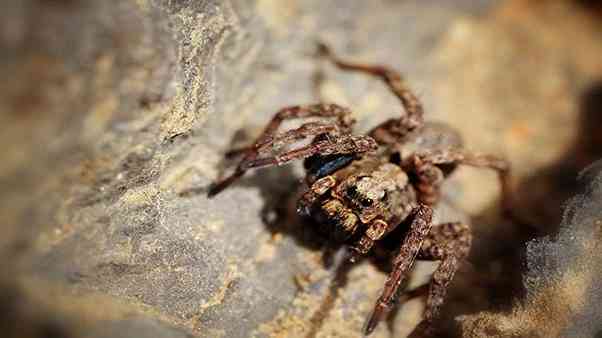
A well-spun web can be a beautiful thing, outdoors. Spiders do real good in the garden, eating many of the insects that damage plants. Most house spiders are harmless to people. Still, most of us would rather they stay outside. Knowing what attracts spiders, how they get in, and where they hide helps you choose the steps to take to keep them out. Curious about the good they do outside? Read about the benefits of spiders in the garden.
Key Takeaways
Spiders are attracted to homes that offer food, shelter, and moisture. Their main food is other bugs, so a home with ants, flies, or other insects is a home with a spider buffet. Quiet, cluttered spaces give them shelter, and damp areas like basements and the spaces under sinks supply water. That’s why spiders turn up everywhere from the basement to the attic to the bathroom.
Spiders get inside through surprisingly small openings: a gap around a window or door, a crack in the foundation, or an unscreened pipe or vent. They also hitch rides. Storage boxes from the garage or shed, firewood, lumber, secondhand furniture, and even grocery bags can carry spiders indoors.
Spiders hide in dark, undisturbed places. Check corners, cupboards, closets, storage boxes, piles of paper or cardboard, and general clutter. Some spiders even tuck into bedding, laundry, or toys that haven’t been moved in a while. It’s worth giving stored items a shake before you use them.
The most effective way to keep spiders out is to combine prevention with a barrier. Seal the gaps they use to get in, remove the clutter and webs that make them comfortable, and reduce the bugs they eat. Each step below takes just a little time, and together they make your home less inviting to spiders. Then add a long-lasting spider barrier inside and outside around your home’s foundation.
Spiders love quiet corners. Store items in sealed plastic bins instead of cardboard boxes, keep storage boxes off the floor where you can, and recycle stacks of paper. Pay extra attention to closets, garages, basements, and attics.

Regular vacuuming removes spiders, their webs, and their egg sacs before the next generation hatches. Empty the vacuum contents outside when you’re done.
Outdoor lights attract the night-flying insects spiders eat, and spiders follow. Turn off porch lights when you don’t need them, or switch to bulbs that are less attractive to insects, such as yellow “bug” lights.
Spiders often gather around the outside of a home before they wander in. Move firewood, lumber, and yard debris away from the foundation, remove dead plants, and trim shrubs so they don’t touch the house.

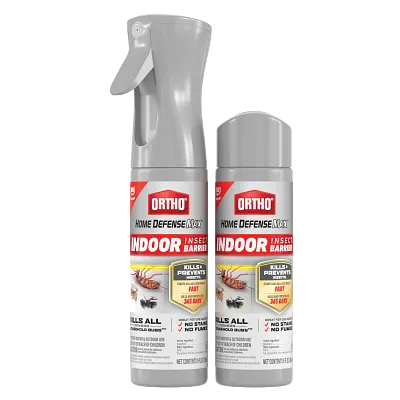
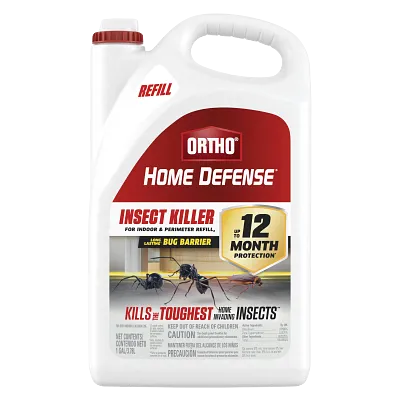
Ortho Home Defense products, like Ortho Home Defense Insect Killer for Indoor & Perimeter, kill spiders and create a barrier that helps keep new ones from getting in. Use it in both places spiders travel: inside paying close attention to their hiding spots, and outside where they enter. The formula gives off no fumes, dries clear, and dries fast.
| Indoors | Outdoors | |
|---|---|---|
|
Where to spray |
A 4-inch band along baseboards, around doors and windows, and into cracks, corners, closets, and other hiding spots |
A 12-inch band along your foundation and around doors, windows, and other entry points |
|
How long it lasts |
Up to 12 months against ants, roaches, and spiders on non-porous surfaces |
About 3 months |
|
When to reapply |
Once a year or when you see new activity |
Every 3 months or when you see new activity |
Keep people and pets out of treated areas until the spray has completely dried. After that, they can return. For tips on prepping a room before you spray, see the Frequently Asked Questions below.
Most house spiders are harmless to people. Their venom is meant for the insects they eat, and few spiders bite humans at all. The two venomous spiders worth knowing in the US are the black widow and the brown recluse. If you’re bitten and notice unusual symptoms, contact your doctor right away. To figure out which spider you’ve found, see our guide to common house spiders or our guide to venomous spider species.

Pets can go back into a treated room, or outside into a treated area, once the spray has completely dried. Drying time varies with temperature, humidity, airflow, and the surface you sprayed, so check that treated areas have dried completely before letting pets back in.
Additional tips when spraying for spiders:
Many people notice more spiders indoors in late summer and fall. Most of those spiders aren’t coming in from the cold; they’re house spiders that already live inside, and the ones you see wandering are usually mature males looking for mates. Sealing gaps and keeping a barrier in place before late summer helps reduce how many you see.

Joro spiders rarely come indoors. They’re large, brightly colored orb weavers that build big, golden-tinged webs outdoors, on porches, eaves, fences, trees, and shrubs. Native to East Asia, they’ve become established in the southeastern US and are gradually spreading to new areas.
A few quick facts:
If a web is in an inconvenient spot, like across a doorway, you can knock it down with a broom. Sealing gaps around doors and windows helps keep any spider from wandering inside.
Some research suggests peppermint oil can repel certain spider species, but results vary by species and the effect fades as the scent does. Lemon oil, another popular remedy, showed no effect in testing. Peppermint oil won’t remove spiders that are already settled, and concentrated essential oils can be harmful to cats, so use caution if you have pets.
For lasting results, pair prevention steps like sealing gaps and decluttering with a barrier product labeled for spiders.
Yes. Spiders follow their food, so fewer insects means fewer spiders. Ortho Home Defense Insect Killer for Indoor & Perimeter also controls many of the bugs spiders eat, including ants, flies, crickets, and silverfish. For a whole-home approach, see How to Get Rid of Bugs Indoors.