




Update Location
Enter a ZIP code to get product recommendations and information tailored to your area.

Backyard Builder
Create a custom backyard solution with our interactive tool
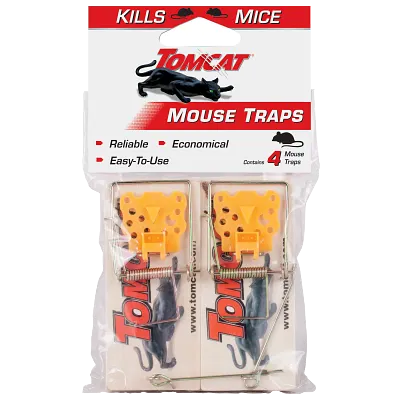
Mouse control is the practice of eliminating and preventing house mouse infestations using targeted products—traps, bait stations, repellents, and exclusion methods—to protect your home from these destructive, disease-carrying pests. Effective DIY mouse control addresses the full scope of the problem: active rodents, mouse entry points, and residual contamination. Tomcat gives you everything you need to execute a complete rodent control strategy without calling in a professional.
Know the enemy before you engage. The clearest signs of mice in your house include small, dark droppings about the size of a grain of rice (found along walls, inside cabinets, or behind appliances), gnaw marks on food packaging and electrical wiring, shredded nesting materials, a persistent musky odor, and the sound of scratching in the walls at night. Mice are nocturnal—activity during daylight hours can indicate a large population already established in your home.
DIY mouse control with Tomcat is faster, more affordable, and equally effective for most residential infestations. Professional exterminators charge hundreds to thousands of dollars and typically use the same trapping and baiting methods you can deploy yourself. For most homeowners, Tomcat delivers professional-grade mouse extermination without the professional price tag—with the added advantage of acting immediately rather than waiting for a scheduled visit.
| Product Type | Best For | Use When |
|---|---|---|
|
Snap Traps |
Fast, targeted kill |
Small to moderate indoor infestation |
|
Bait Station (Disposable) |
Low-maintenance coverage |
Convenience; single-use or isolated zones |
|
Bait Station (Refillable) |
Ongoing rodent control |
Large infestation or long-term defense |
|
Repellents |
Prevention and deterrence |
Perimeter defense; post-control maintenance |
|
Glue Traps |
Monitoring and supplemental catch |
Active runways, tight spaces near walls |
Deploy along active runways. Mice travel the edges of rooms—place traps flush against walls, behind appliances, and inside cabinets where you've spotted droppings or gnaw marks. Central room placement is wasted effort.
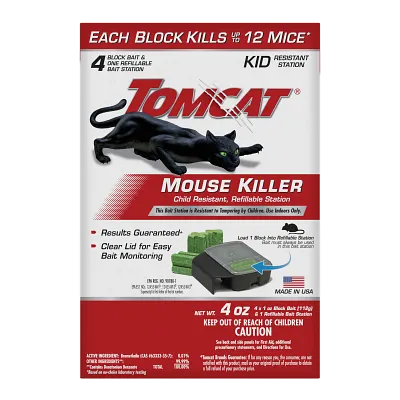
Use multiple methods simultaneously. A severe infestation demands a multi-front strategy. Snap traps for quick kills, bait stations for deep coverage in wall voids and crawlspaces, and repellent at every known mouse entry point. Don't fight a coordinated invasion with a single weapon.
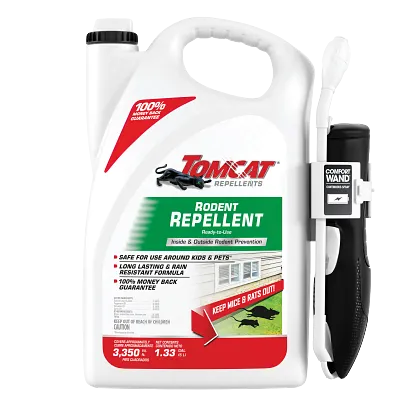
Once you've addressed the active infestation, lock the door behind you. Mice can squeeze through a hole the size of a dime. Rodent exclusion starts with a thorough inspection: gaps around utility pipes, cracks in the foundation, worn door sweeps, and any opening where cables enter walls. Seal them with steel wool, hardware cloth, or caulk. Apply Tomcat Rodent Repellent around perimeters and entry zones to reinforce your exclusion and discourage mice from testing new openings. How to deter mice permanently: seal the gaps, make your home inhospitable, and stay vigilant.
After eliminating mice, mouse droppings cleanup requires care. Never sweep or vacuum dry droppings—that can aerosolize particles linked to Hantavirus. Ventilate the area for 30 minutes first. Wear gloves and an N95 mask, soak droppings with a bleach-and-water solution (1.5 cups bleach per gallon), wipe up with disposable towels, and seal all waste in plastic bags. Remove nesting material the same way. Fresh air and odor control restore your home to the sanctuary it should be.
Size is the clearest indicator. Mouse droppings are 3–6mm long (roughly the size of a grain of rice), while rat droppings are 12–18mm long and considerably thicker. Mice leave finer gnaw marks and tend to nest in wall voids and insulation; rats often burrow and prefer lower areas like basements. Check both the droppings and gnaw-mark size to correctly identify your pest before selecting your control method.
Use snap traps immediately along active runways—flush to walls, near droppings, inside cabinets. Add a bait station for broader coverage. Check and reset traps daily. A properly deployed multi-point Tomcat setup typically can deliver results within 48–72 hours.
Through gaps you haven't noticed. The most common mouse entry points include openings around plumbing and utility lines, cracks in the foundation, deteriorated weather stripping, and gaps beneath garage doors. A mouse needs only a dime-sized hole to enter. Walk the exterior of your home and inspect every point where pipes, cables, or wires penetrate the structure—those are where rodent exclusion needs to start.
Act immediately—those sounds are almost always mice. Set snap traps and bait stations in the rooms nearest the sounds, along walls and inside cabinets. Mice in walls venture out to feed at night and follow consistent runways. Intercepting them at those predictable paths is the fastest path to resolution.
Ventilate the area for at least 30 minutes first. Put on gloves and an N95 respirator. Saturate droppings with a bleach-and-water disinfectant, then wipe up using disposable paper towels. Seal all waste materials in plastic bags before discarding. Never sweep or vacuum dry mouse droppings—that's how airborne particles spread.
Execute a three-part attack: (1) Eliminate with snap traps and bait stations placed along every active runway. (2) Exclude by sealing all mouse entry points you can find with steel wool, caulk, or hardware cloth. (3) Deter with Tomcat Rodent Repellent applied around perimeters and access zones to make your home inhospitable to future invaders. Maintain control for at least 2–3 weeks after activity appears to stop—don't declare victory too early.