




Update Location
Enter a ZIP code to get product recommendations and information tailored to your area.

Organic gardening is one of the most rewarding ways to grow your own food and flowers while working with nature instead of around it. Whether you're planting your first container or converting a whole backyard, here's what you need to know — what "organic" actually means, why it's worth trying, and how to get started.
Organic gardening means growing plants using only the products and practices permitted by the USDA's National Organic Program which rules out synthetic pesticides and most synthetic fertilizers in favor of natural, plant- and soil-based approaches. It works the same way whether you're growing in containers, in-ground gardens, or raised beds, and it treats your garden as a small ecosystem for plants, pollinators, and beneficial insects, not just a place to grow food.
Organic gardening: growing and caring for plants using only naturally derived products and practices, rather than synthetic pesticides or fertilizers, with an emphasis on building healthy soil and supporting the wildlife around it.
Traditional gardening focuses mainly on plant performance—getting a plant to grow as vigorously as possible. Organic gardening cares about that too, but treats the growing environment around the plant as equally important: soil quality, the microorganisms living in it, and the wildlife it supports.
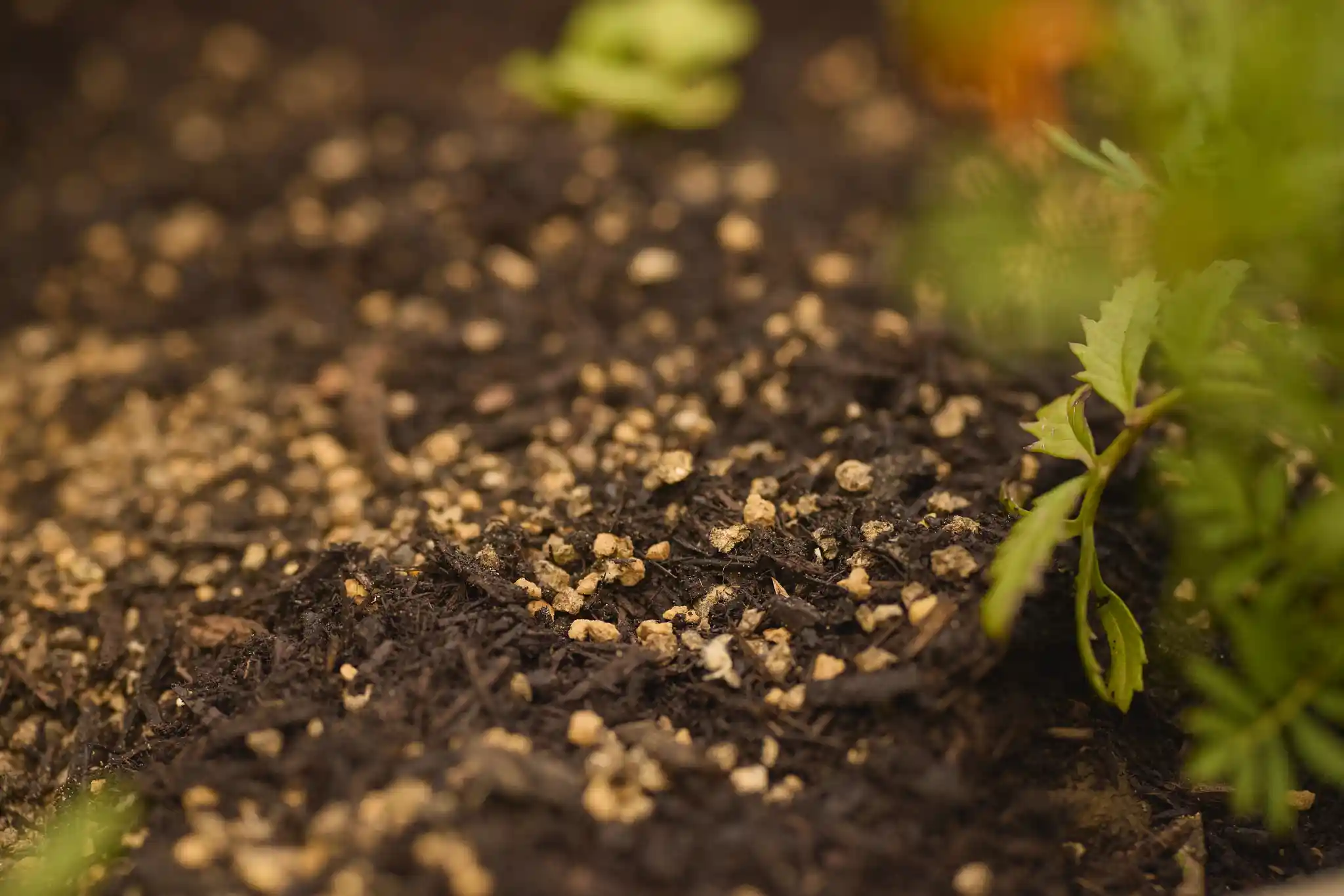
Healthy soil is full of fungi, bacteria, other microbes, small insects, and earthworms that break down organic matter and help plant roots absorb nutrients. Organic gardening leans on that ecosystem instead of working around it, feeding the soil so the soil can feed the plant.
Organic gardening pays off in three concrete ways:

No. Going organic doesn't mean settling for less. Disappointing results almost always trace back to a handful of common beginner mistakes rather than the growing method itself. Get the fundamentals right, and an organic garden can perform just as well as a conventionally grown one, often with healthier soil to show for it season after season.
The most common culprits behind a lackluster organic garden are:
Address these four and organic growing stops being the variable holding your garden back.
USDA Organic and OMRI Listed are the two verified organic claims you'll run into while shopping for your garden, and neither one is actually required for something to be genuinely organic. Here's what each one covers, and how "natural" differs from both.
USDA Organic vs. OMRI Listed
USDA Organic is a certification, administered by the USDA's National Organic Program, and it isn't limited to food; it also covers live plants, including garden transplants like Bonnie Plants Organics starter plants, when they're grown under a certified organic system.
OMRI Listed is different. It's not a certification but a verification, issued by the independent nonprofit Organic Materials Review Institute, confirming that a specific input—a fertilizer, soil, or pesticide—meets organic production standards. You'll see it written as "OMRI Listed for organic use"; terms like "OMRI Certified" aren't accurate, since certification applies only to produce and plants, not inputs.
Neither designation is strictly required for something to be genuinely organic. Very small growers selling a limited amount of organic product each year are exempt from formal USDA certification, but they still have to follow the same organic production standards; they just can't use the official USDA seal or say "certified." And gardening at home doesn’t require certified or listed products at all: USDA Organic and OMRI Listed exist to give shoppers an independently verified way to confirm an organic claim.
Organic vs. Natural
Independent verification is what separates true organic garden products from those labeled simply "natural." While "natural" implies the product ingredients come from the earth, it's essentially an unregulated term that can be used with no proof or oversight behind it. Two products can both say "natural" while differing significantly in what they actually contain.
"Organic" is usually more legally restricted, but there’s a catch: there are no federal USDA standards for garden inputs like soils, potting mixes, or fertilizers. If you want a claim you can verify rather than take on faith, OMRI Listed or USDA Organic are the labels to look for.
Here's the practical takeaway: choosing a USDA Organic or OMRI Listed product is a genuine, verifiable step toward organic growing.
For the full story on how OMRI's review process works and which ScottsMiracle-Gro products are OMRI Listed, see What Does OMRI Listed Mean?
Step 1: Start With Quality Soil
Organic gardening starts below the soil surface. Choose a quality organic soil formulated with natural ingredients; it's the foundation everything else in this step-by-step builds on. For the full story on our organic soils, read Why Miracle-Gro Organic Soil Is a Sustainable Choice for Your Garden.
Step 2: Choose Your Organic Plants Wisely
Look for USDA Organic-labeled seeds or certified organic starter plants, like Bonnie Plants Organics. Where you have a choice, pick varieties with inherent disease resistance, and don't be afraid to mix hybrid and heirloom types; both have a place in an organic garden.

Step 3: Feed Your Garden Regularly
Start feeding about a month after planting, and keep to a regular schedule rather than waiting until plants show signs of stress. Both granular and liquid organic plant foods work well; the right choice depends on what and how you're growing.Why Choose Miracle-Gro Organic Plant Food walks through our organic plant food formulas.
Step 4: Give It Plenty of Light and Water
Most vegetables and flowering plants need 6 to 8 hours of direct sunlight a day. Water consistently—at least an inch per week, more during hot stretches—rather than occasional heavy soakings.


Not every insect in your garden is a pest; many are essential to its health. The organic approach starts with telling beneficial insects from harmful ones, then reaching for physical and natural controls before anything else.
Beneficial insects worth protecting and even attracting include bees and butterflies (pollination), ladybugs and green lacewings (they eat aphids and other soft-bodied pests), dragonflies (mosquitoes and other flying insects), and several wasp species (natural predators of caterpillars and other garden pests). Planting a variety of flowering plants nearby helps keep these allies around.
When harmful pests do show up, organic gardens rely on a few reliable, chemical-free tactics before reaching for anything else:
To learn more about organic gardening myths, read The Biggest Myths about Organic Gardening
Organic gardening scales to fit however much time and space you have—a single container on a balcony or a full backyard garden both count. It's also inherently community-minded: healthier soil, fewer pesticide residues, and more pollinator habitat benefit more than just your own yard. If you've been on the fence, there's no better time to start than your next planting season.
Not technically. Home gardening doesn't require the formal certification that commercial organic farms go through. That said, choosing OMRI Listed products is the clearest way to confirm a fertilizer or soil amendment genuinely meets organic production standards, rather than just carrying an "organic-sounding" label with nothing behind it. See What Does OMRI Listed Mean? for the full explanation of how that verification process works.
You can start using organic products and practices immediately. There's no waiting period for a home garden the way there is for commercial organic certification. That said, it typically takes a full growing season or two for soil biology to fully adjust and for you to see the soil-health benefits build up.
Yes. Plenty of gardeners use organic methods in food-growing beds where soil health and pesticide residue matter most, while using conventional approaches elsewhere in the yard. There's no rule requiring an all-or-nothing approach; start wherever it matters most to you.