




Update Location
Enter a ZIP code to get product recommendations and information tailored to your area.

There are no federal standards for how the word "organic" can be used on a pesticide, fertilizer, or soil label which makes it genuinely hard to tell which products actually belong in an organic garden and which just sound like they do. That's the gap OMRI fills. Several of our ScottsMiracle-Gro products meet OMRI's rigorous standards for organic use, so here's exactly what that means, how a product earns it, and which of our products carry it.
OMRI is the Organic Materials Review Institute, an independent third-party reviewer accredited to ISO 17065 standards by the USDA's Quality Assessment Division. In plain terms: OMRI reviews products and determines whether they meet the standards for organic gardening and production. The USDA certifies organic plants, food, and fiber—the actual crops and materials you'd eat or wear—while OMRI reviews the inputs used to grow them: fertilizers, soils, pesticides, and similar products, checking each one against the USDA's organic production standards.
OMRI: an independent nonprofit that reviews fertilizers, pesticides, soils, and other growing inputs against USDA organic production standards, and maintains the public list of products that pass.
Product suppliers voluntarily submit applications to OMRI, which then reviews the full ingredient list, including the inert ingredients most labels wouldn't spell out, along with the manufacturing process behind the product. About 10% of submitted applications are rejected. Products that pass may display the OMRI Listed seal on their packaging.
No, and the terminology matters here. "Certified Organic" is a USDA designation that only applies to finished plant, food and fiber products, like the transplants, fruits, vegetables, and cotton you'd find already grown or made. Input products—fertilizers, soils, pesticides—aren't eligible for that designation at all.
Instead, the correct term is OMRI Listed. You'll see "OMRI Listed for organic use" or "OMRI Listed for organic production" — both are accurate. Terms like "OMRI Certified," "OMRI Approved," or "OMRI Registered" aren't correct usage and don't reflect how OMRI's own standards describe the designation.
Mostly, but not entirely, and that's by design, not a loophole. Not every ingredient in an OMRI Listed product is organic in the farm-grown sense, but every ingredient has been reviewed and approved for organic use under the USDA's organic production standards. Those standards generally allow naturally derived ingredients plus a small, thoroughly reviewed set of synthetic ingredients where no natural alternative performs the job. When you see OMRI Listed, you're seeing the whole formula and manufacturing process vetted against that standard, not a claim that every molecule in the bottle came from a plant.
Once a product passes OMRI's review, the manufacturer can put the OMRI Listed seal on the label. Seeing that mark means you're looking at a product that's genuinely listed for organic gardening—not just marketed that way. If you want to double-check a specific product yourself, OMRI's own search page lets you look it up directly.

No, and this is exactly where checking for the OMRI Listed seal takes the guesswork out of shopping. Words like "organic," "natural," and "non-toxic" aren't regulated the same way OMRI Listed is, so a label can use any of them without much behind it. Even a product whose ingredients sound organic might still include synthetic inert ingredients or a manufacturing process that wouldn't meet OMRI's standards. The seal is the part that's actually been checked.
We have several OMRI Listed products across our brands. As always with any pest, weed, or plant-care product, read and follow the label directions for the specific product you're using.


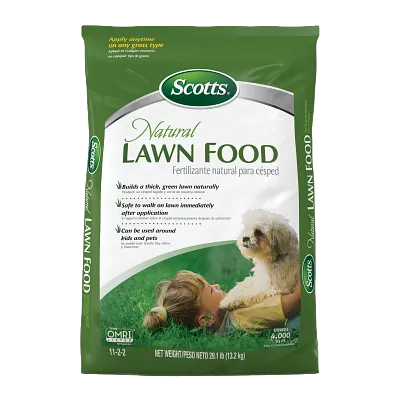
Scotts Natural Lawn Food: A lawn fertilizer for all grass types that can be applied any season, made without synthetic ingredients.


For the full breakdown of which Miracle-Gro Organic plant food formula fits your garden, see Why Choose Miracle-Gro Organic Plant Food.