




Update Location
Enter a ZIP code to get product recommendations and information tailored to your area.

If you live along the Gulf Coast, you know sandy, acidic soil and long dry spells can be hard on a lawn. Bahia grass doesn't mind either. It's a warm-season grass that's genuinely at home in poor, sandy soil, and it needs less babying than most Southern lawn grasses once it's established.
It won't win a beauty contest against zoysia or St. Augustine, but for a low-maintenance, drought-tolerant lawn on tough coastal soil, it's hard to beat. Here's how to plant and care for it.
Bahia grass is a warm-season grass that tolerates poor, sandy, acidic soil and dry spells better than most lawn grasses, making it a popular low-maintenance choice for Gulf Coast yards.

The best time to plant Bahia grass is late spring into early summer, once the air temperature is consistently at or above 80°F. For good seed germination, aim for a soil temperature between 65°F and 90°F. Bahia can be seeded or sodded; seeding is slower to establish but more budget-friendly for larger areas.
Step 1: Clear the Area
Clear rocks, sticks, and debris, and remove existing grass or weeds before planting.
Step 2: Prep the Soil
Loosen the top layer of soil. Bahia tolerates poor, sandy soil well, so soil amendment usually isn't necessary.
Step 3: Spread the Seed
Choose Pensacola or Argentine bahiagrass seed based on your climate and preferred texture. Then use your Scotts spreader set to the new lawn rate listed on the back of the back to apply your grass seed.
Step 4: Add Starter Fertilizer
A starter fertilizer, like Turf Builder Starter Lawn Food, helps new seedlings establish.
Step 5: Rake It In
Lightly rake the seed into the soil surface so it's covered but not buried.
Step 6: Water Consistently
Keep the soil consistently moist until seedlings are established, then transition to a normal watering schedule.
How Much Water Does Bahia Grass Need?
Bahia is one of the more drought-tolerant warm-season grasses and typically needs less supplemental water than bermuda or St. Augustine once established, thanks to its deep root system.
What Height Should You Mow Bahia Grass?
Mow your bahiagrass lawn at 2 to 3 inches, and keep your mower blade sharp. Bahia's seed stems can shred rather than cut cleanly when mowed with a dull blade.
How Often Should You Feed Bahia Grass?
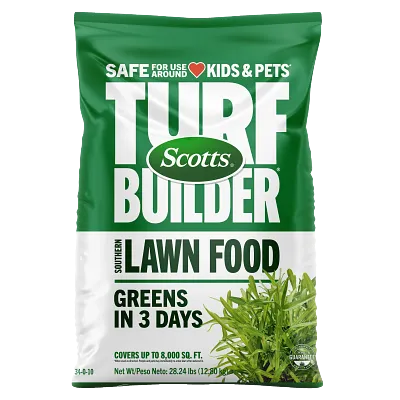
Feed your bahia lawn 2 to 4 times a year with a lawn food suited to Southern grasses, like Turf Builder Southern Lawn Food. If your soil pH is above 7, using a lawn fertilizer that includes iron can help prevent grass yellowing.
What Pests and Diseases Affect Bahia Grass?
Watch for the lawn disease dollar spot, which shows up as small, straw-colored circular patches (roughly silver-dollar-sized) that can grow and merge in humid weather. A lawn fungicide labeled for dollar spot that’s safe to use on bahiagrass will help bring it under control. See How to Treat Dollar Spot Disease in the Lawn to learn how to identify and treat it.
Bahia, along with bermuda, is also one of the grass types mole crickets prefer most. Look for small mounds of loose soil, a spongy feel underfoot when walking on the lawn, and tunneled, browning patches, especially in late spring and summer. A lawn insect control product labeled for mole crickets, such as Ortho BugClear Lawn Insect Killer, will knock them back. See How to Kill Mole Crickets in the Lawn to learn how to confirm a problem before you treat it.

Bahia goes dormant and browns in cooler weather, though in the mildest parts of the Gulf Coast it may stay greener longer than more cold-sensitive warm-season grasses. Overseeding with ryegrass is an option for winter color, but many Bahia lawns are left dormant, since Bahia's naturally low-maintenance appeal is part of why homeowners choose it in the first place.