




Update Location
Enter a ZIP code to get product recommendations and information tailored to your area.

If your Southern yard bakes in full sun for most of the day, Bermuda grass might be the best thing that ever happened to it. It's the classic Southern lawn grass: heat-loving, drought-tolerant, and tough enough to bounce back from just about anything your family and pets throw at it.
The tradeoff is that Bermuda goes dormant and turns brown once temperatures drop in winter (more on keeping it green year-round below). Let's get your Bermuda lawn started.
Bermudagrass is a warm-season grass that thrives in full sun and high heat, spreading aggressively to form a dense, wear-resistant turf—making it the go-to choice for Southern lawns that see a lot of use.

Stolons: above-ground runners that grow outward from the base of the grass plant and root wherever they touch soil. Bermuda grass spreads through both stolons and underground rhizomes, which is why it fills in bare spots and repairs itself so quickly.
The best time to plant Bermuda grass is late spring into early summer, once the air temperature is consistently at or above 80°F. For germination, aim for a soil temperature between 65°F and 90°F. Bermuda grass seed won't germinate well in cool soil, so don't rush planting in early spring.
Step 1: Clear the Area
Clear the area of rocks, sticks, and debris, and remove any existing grass or weeds so the new seed has a clean start.
Step 2: Prep the Soil
Loosen the top layer of soil and spread a thin layer of fresh soil, like Turf Builder LawnSoil. Then rake it smooth to create good contact for the seed.
Step 3: Spread the Seed
Use your Scotts spreader set to the new lawn rate on the bag, walking at a steady pace with slightly overlapping passes.
Step 4: Add Starter Fertilizer
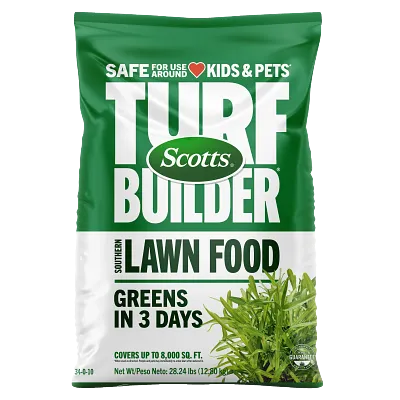
Applying Turf Builder Starter Lawn Food after seeding gives new Bermuda seedlings the nutrients they need for fast, strong establishment.
Step 5: Rake It In
Lightly rake the seed into the top of the soil so it's covered but not buried.
Step 6: Water Consistently
Water lightly multiple times a day while the seed is germinating to keep the top layer of soil moist. Taper off your watering to about once a day as seedlings establish, then down to the normal watering schedule once the lawn is mowing-ready.

How Much Water Does Bermuda Grass Need?
An established Bermuda lawn needs about an inch of water a week. Its deep root system makes it one of the more drought-tolerant warm-season grasses, so it can coast through short dry spells without much help.
What Height Should You Mow Bermuda Grass?
Mow newly seeded Bermuda at about 2 inches; once established, keep it low—1 to 2 inches—for the dense, tidy look Bermuda is known for. Never remove more than a third of the blade height in a single cut.
How Often Should You Feed Bermuda Grass?
Feed Bermuda with a starter fertilizer at planting, then switch to a Southern lawn food every 6 to 8 weeks through the growing season, tapering off as growth slows in early fall.
How Do You Repair Bare Spots in a Bermuda Grass Lawn?
Bermuda's stolons mean it usually fills in minor damage on its own, but larger bare patches benefit from a helping hand. Clear the area, apply a Bermuda-specific bare spot product, like EZ Seed, water it in well, and keep foot traffic off until the new growth is established.
What Pests and Diseases Affect Bermuda Grass?
Watch for spring dead spot, which shows up as circular or arc-shaped dead patches right as Bermuda greens up each spring, often in the same spots year after year. It's caused by thatch buildup and too much late-season nitrogen, so dethatching and easing back on fertilizer in the fall are the best prevention; a lawn fungicide applied in fall is the most effective treatment if it keeps coming back.
In late summer, watch for armyworms, which can strip a Bermuda lawn brown in just a few days — small, pale "window-pane" marks on the blades are an early warning sign, so treat quickly with a lawn insect control product if you spot them.

Overseed with perennial ryegrass in early fall to keep color through the winter months while Bermuda is dormant. Mow the Bermuda short, spread ryegrass seed at the overseeding rate listed on the bag, and keep it consistently moist until it germinates. The ryegrass will die out naturally as Bermuda wakes back up in spring. See How to Seed a Dormant Lawn in Winter for the full how-to.