




Update Location
Enter a ZIP code to get product recommendations and information tailored to your area.

Ever feel like your yard has a tricky personality? That one shady spot under the big maple where nothing wants to grow, and that other patch that gets baked by the sun and trampled by the kids—sound familiar? Then you need to meet fescue.
Fescue is one of the most versatile cool-season grasses you can find. The family is big, but for your lawn you'll likely meet one of two main types: tall fescue or fine fescue. Think of them as cousins with different strengths. Let's find the right one for you.
Tall fescue is the durable, sun-and-traffic workhorse of the family; fine fescue is the soft, shade-loving specialist. Most lawns benefit from one or the other depending on sun exposure.
Tall Fescue: The Tough All-Star

Fine Fescue: The Shade-Dwelling Beauty

Bunchgrass: a grass that grows in dense, upright clumps rather than spreading sideways with runners. Tall fescue and most fine fescues are bunchgrasses, which is why they need help — reseeding or a spreading companion grass — to fill in bare spots.
The best time to plant fescue—tall or fine—is in the fall, once air temperatures cool into the 60–75°F range. The cooler air and still-warm soil give new grass a head start on strong roots before winter. For germination, aim for a soil temperature between 55°F and 70°F.
Step 1: Clear the Area
Clear the area of rocks, sticks, and other debris. Remove any old grass or weeds so the new seed gets the best possible start.
Step 2: Prep the Soil
Spread a thin layer of fresh soil, like Turf Builder LawnSoil, over the area to create a welcoming bed for new seed.
Step 3: Spread the Seed
Grab your Scotts spreader, check the grass seed bag for the right setting, and walk at a steady pace, overlapping each pass slightly for even coverage.
Step 4: Add Starter Fertilizer
Applying Turf Builder Starter Lawn Food after seeding gives new seedlings the nutrients they need to grow strong and healthy from day one.
Step 5: Rake It In
Gently rake the area so seeds are lightly covered by soil; this helps germination and protects seed from being washed away or eaten by birds.

Step 6: Water Consistently
Keep the soil consistently moist, but not soaking wet, until new grass is a couple of inches tall. This usually means light watering once or twice a day.
How Much Water Does Fescue Need?
Water deeply and less often to encourage roots to grow deep into the soil; this is the secret to fescue's drought tolerance, especially for tall fescue. Aim for about an inch of water per week, including rainfall.
What Height Should You Mow Fescue?
Keep fescue on the taller side, around 3 to 4 inches. Mowing high helps it develop a deep root system and shade out weeds. Keep your blades sharp, since tall fescue is tough enough to dull them faster than other grasses.
How Often Should You Feed Fescue?
Feed your fescue lawn four times a year. Regular feeding helps it stay thick and green, handle heat and drought stress, and naturally crowd out weeds.
Does Fescue Spread or Fill In Bare Spots on Its Own?
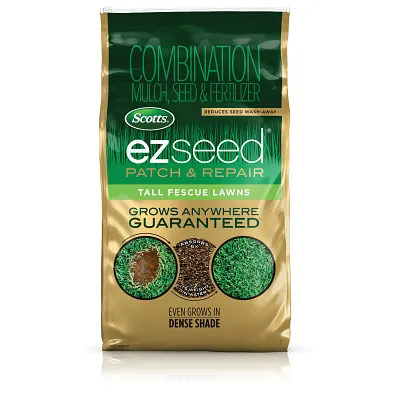
No. Most fescue varieties, like those in O.M. Scott & Sons Tall Fescue Grass Seed, are bunchgrasses that grow in tidy clumps rather than spreading sideways to self-repair. If you get a thin or bare patch after a tough summer, use an all-in-one patch and repair mix, like EZ Seed, for small spots, or overseed with a product designed to thicken your lawn, like Thick’R Lawn, for larger thin areas.

What Lawn Diseases Affect Fescue?
Fescue's biggest weak spot is susceptibility to fungal disease in hot, humid weather. Water in the morning rather than at night, and keep your lawn well-fed. If you do see signs of disease, a lawn fungicide can help bring it back under control.