




Update Location
Enter a ZIP code to get product recommendations and information tailored to your area.

The most effective thing you can do for a drought-prone lawn doesn't happen in summer; it happens at planting time. Here's how to choose the right grass for your region, your conditions, and the dry spells ahead.
Every summer, millions of homeowners fight the same battle: sprinklers running, water bills climbing, and grass that stubbornly refuses to stay green. Sometimes the problem isn't how you're caring for your lawn; it's what your lawn is made of.
The grass variety you grow is the single biggest factor in how your lawn handles heat, drought, and dry spells. The right grass for your region can stay green with significantly less water, recover faster from stress, and go dormant during tough stretches without dying. The wrong grass will always need more help than you're able to give it, no matter how carefully you water.
The good news is that there's a drought-tolerant grass type for virtually every climate in the U.S., whether you're in the scorching heat of the Southwest, the humidity of the Gulf Coast, the temperature swings of the Great Plains, or the summer dry spells of the North. This guide breaks them down by region and situation, so you can find the right fit for your yard and stop fighting the weather every summer.
No amount of watering strategy, mowing technique, or fertilizer can fully compensate for growing the wrong grass in the wrong place. A grass type that isn't suited to your region's heat and rainfall patterns will always be fighting an uphill battle, requiring more water, more intervention, and more recovery time after every dry spell.
Drought tolerant: Being able to survive dry spells longer, go dormant without dying, and recover faster once water returns. You may see grass described as “drought resistant,” but no grass truly resists drought. A long, severe enough dry spell will eventually kill any lawn. Some grasses just handle it far better than others.
Drought-tolerant grasses earn that designation in different ways. Some are water-efficient, using less moisture per square foot than other grass types. Some grow deep root systems that can access moisture far below the surface. Some have a built-in drought survival mechanism: they go dormant when things get dry, then green back up when conditions improve. And some do all three.
The right choice depends on where you live, how much sun your lawn gets, how much foot traffic it sees, and whether you're willing to accept dormancy periods or want year-round green. This guide breaks it down by region.

Already have an established lawn and are dealing with summer drought? For in-season care, including watering, mowing, feeding, and recovery, see our complete guide: How to Care for Your Lawn During Summer Heat and Drought. If your lawn has already turned brown, Reviving Your Lawn After Drought walks you through bringing it back.
Any grass type performs better during drought when it's well-maintained year-round. Lawns that are mowed at the right height, fed on a regular schedule with a slow-release fertilizer, and watered deeply (rather than shallowly and often) develop the stronger, deeper root systems that are most critical during dry periods. Drought tolerance is a trait of the grass variety, but it's also a result of how that grass has been cared for.
Southern and southwestern climates combine intense heat with extended dry periods, sometimes for months at a time. Warm-season grasses are the right category here; they're built for heat, grow most actively in summer, and go dormant in winter rather than summer.
Bermudagrass
Bermudagrass is the gold standard for hot, dry, high-traffic Southern lawns. Once established, it's exceptionally heat- and drought-tolerant, capable of sending roots 6 feet deep in good soil conditions, accessing water that shallower-rooted grasses simply can't reach. It grows aggressively, spreads quickly to repair worn or bare spots, and handles heavy foot traffic better than almost any other grass type, which is why it's the go-to choice for athletic fields throughout the South.
Best for:
Mow at: 1 to 2 inches; requires more frequent mowing than slower-growing types
Shade tolerance: Low (needs full sun to thrive)
Available as: Seed, like ScottsTurf Builder Rapid Grass Bermudagrass, or sod

Zoysiagrass
Zoysia is another strong performer in heat and drought, with a key advantage over bermudagrass: it tolerates more shade. It grows more slowly (which means less frequent mowing) and requires less fertilizer. During drought, zoysia may go dormant before bermudagrass does, but it recovers well thanks to an extensive network of underground rhizomes that help it spread and self-repair.
Zoysia varieties range from very fine-textured to coarser types, so it's worth selecting a variety suited to your aesthetic preference and maintenance expectations.
Best for:
Mow at: Varies by variety, typically 1 to 2.5 inches
Shade tolerance: Moderate (handles partial shade better than bermudagrass)
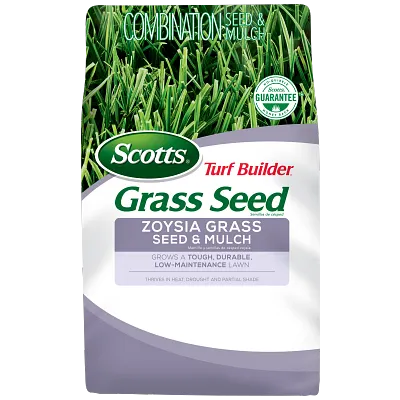
Available as: Seed, like Scotts Turf Builder Grass Seed Zoysia Grass Seed & Mulch, sod, or plugs (depending on variety)

St. Augustinegrass
St. Augustinegrass is the dominant lawn grass in Florida and along the Gulf Coast for good reason: its deep roots and high tolerance for dehydration make it exceptionally well-suited to hot, coastal climates. It spreads via aboveground stems (stolons) and fills in bare spots effectively when provided with consistent nutrition.
St. Augustine handles shade better than bermudagrass but is pickier about maintenance. It needs good air circulation to avoid fungal problems like large patch and gray leaf spot, and it's less cold-hardy than the other warm-season options.
Best for:
Mow at: 2.5 to 4 inches
Shade tolerance: Good (one of the more shade-tolerant warm-season grasses)
Available as: Sod, like Scotts ProVista, or plugs

Bahiagrass
Bahiagrass isn't the prettiest grass; its coarse texture and tendency to produce tall, fast-growing seed heads require more frequent mowing to manage. But it's one of the toughest grasses available, thriving in poor soil conditions where other grasses simply won't establish. Its deep root system gives it genuine drought tolerance even in difficult growing environments.
Best for:
Mow at: 3 to 4 inches
Shade tolerance: Low
Available as: Seed, like Scotts Turf Builder Grass Seed Argentine Bahiagrass

Buffalograss
Buffalograss is the right choice for lawns in the Great Plains from the Texas Panhandle north through Kansas and Nebraska into the Dakotas where summer heat, limited rainfall, and cold winters all need to be managed. It's a true native prairie grass, naturally adapted to the region's boom-or-bust moisture patterns. Buffalograss thrives in clay-heavy soil, requires very little water once established, and demands minimal fertilizer input.
The trade-off: it goes dormant early in fall (sometimes as early as September in northern latitudes) and greens up late in spring, giving it a long dormancy window. Growth is also lower and slower than most turf grasses. For homeowners who want a low-input, regionally appropriate lawn in its native range, though, it's hard to beat.
Best for:
Mow at: 2 to 3 inches; can be left unmowed for a natural look
Shade tolerance: Low
Available as: Seed, like O.M. Scott & Sons Buffalograss Seed, or plugs

Cool-season grasses grow most actively in spring and fall, slow down in summer, and will go dormant if drought becomes severe enough. The goal with drought-tolerant cool-season varieties is to choose types that can handle summer heat without requiring constant intervention and come back reliably when conditions improve.
Tall Fescue
Tall fescue is the standout performer for drought tolerance among cool-season grasses. Its deep root system—deeper than Kentucky bluegrass or fine fescues—allows it to access soil moisture well below the surface. It also holds up to heat and shade better than most other cool-season options, making it the grass of choice for the transition zone (the middle tier of the country where neither warm-season nor cool-season grass thrives perfectly).
Best for:
Mow at: 3 to 4 inches
Shade tolerance: Good (more shade-tolerant than Kentucky bluegrass)
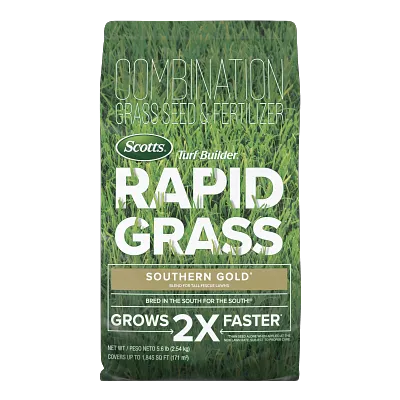
Available as: Seed, like Scotts Turf Builder Rapid Grass Tall Fescue Mix or Scotts Turf Builder Rapid Grass Southern Gold Blend

Kentucky Bluegrass
Kentucky bluegrass is the classic cool-season lawn grass, beloved for its fine texture and rich color. It's less drought-tolerant than tall fescue on its own, but it has a key advantage: its underground rhizomes allow it to spread and self-repair, meaning it can bounce back from summer dormancy and fill in damaged areas effectively once fall arrives.
Mixed with tall fescue, like in Scotts Grass Seed Drought Tolerant Mix, or fine fescues, Kentucky bluegrass performs significantly better during drought. The combination creates a more resilient, self-repairing lawn that blends the best traits of each species.
Best for:
Mow at: 2.5 to 3.5 inches
Shade tolerance: Low to moderate
Available as: Seed, like Scotts Turf Builder Grass Seed Kentucky Bluegrass Mix, or sod

Sheep Fescue
Sheep fescue is a fine fescue variety that earns its place on this list through genuine low-water performance. It's naturally drought tolerant, slower-growing than tall fescue, and exceptionally well-suited to low-maintenance situations including slopes, naturalized areas, and yards where reduced mowing and watering are priorities. Its fine texture and blue-green color give it a distinctive look that works particularly well in informal or meadow-style settings.
Sheep fescue also handles poor, dry, or acidic soils better than most cool-season options, making it a strong choice where other grasses have consistently struggled to establish.
Best for:
Mow at: 3 to 4 inches; can be left largely unmowed in naturalized settings
Shade tolerance: Good
Available as: Seed, like O.M. Scott & Sons Sheep Fescue Seed
If you're open to rethinking what a lawn looks like, O.M. Scott & Sons Strawberry Clover Seed is a highly drought-tolerant option that works across a wide range of climates. Clover's deep root system accesses soil moisture that traditional turf can't reach, allowing it to stay green much longer during dry periods. It requires far less frequent watering, self-feeds when clippings are left on the lawn after mowing, and supports pollinators as a bonus. Strawberry clover is also notably cold-hardy, making it a versatile choice from the transition zone into northern climates.
It's not for every lawn or every homeowner, but for those dealing with recurring drought pressure and high water costs, it's worth a serious look.
Start with your region, then narrow it down by sunlight, foot traffic, and how much upkeep you want. Find the row below that best matches your yard. Warm-season grasses are the right fit across the South, Southwest, and Great Plains; cool-season grasses, led by tall fescue, are the right fit across the North and transition zone.
Match Your Yard to a Drought-Tolerant Grass
| Your Region | Your Yard | Best Drought-Tolerant Choice | Scotts Seed to Use |
|---|---|---|---|
|
South or Southwest |
Full sun, high foot traffic |
Bermudagrass |
|
|
South |
Partial Shade |
Zoysiagrass |
|
|
Florida or Gulf Coast |
Shade or partial shade |
St. Augustinegrass |
Scotts ProVista sod |
|
South |
Poor or sandy soil; low maintenance |
Bahiagrass |
|
|
Great Plains |
Clay or poor soil; very low maintenance |
Buffalograss |
|
|
Upper South or southern transition zone |
Summer heat; sun or partial shade |
Tall fescue |
|
|
Transition zone or North |
Summer drought pressure; want a self-repairing lawn |
Tall fescue and Kentucky bluegrass mix |
|
|
North |
Moderate summers; want fine texture and self-repair |
Kentucky bluegrass |
|
|
North |
Slopes or low-maintenance areas; minimal mowing and watering |
Sheep fescue |
|
|
Transition zone or North |
Open to an alternative lawn; want the least watering |
Strawberry clover |
Compare Drought-Tolerant Grasses at a Glance
| Grass | Type | Where it Grows Best | Shade Tolerance | Mow Height | Available As |
|---|---|---|---|---|---|
|
Bermudagrass |
Warm-Season |
South, Southwest |
Low |
1-2 inches |
Seed or sod |
|
Zoysiagrass |
Warm-Season |
South |
Moderate |
1-2.5 inches |
Seed, sod, or plugs |
|
St. Augustinegrass |
Warm-Season |
Florida, Gulf Coast |
Good |
2.5-4 inches |
Sod or plugs |
|
Bahiagrass |
Warm-Season |
South (poor or sandy soil) |
Low |
3-4 inches |
Seed |
|
Buffalograss |
Warm-Season |
Great Plains |
Low |
2-3 inches |
Seed or plugs |
|
Tall fescue |
Cool-Season |
Transition zone, North |
Good |
3-4 inches |
Seed |
|
Kentucky bluegrass |
Cool-Season |
North |
Low to moderate |
2.5-3.5 inches |
Seed or sod |
|
Sheep fescue |
Cool-Season |
North |
Good |
3-4 inches |
Seed |
Getting the timing right dramatically improves establishment success and drought resilience from the start.
Warm-season grasses (bermudagrass, zoysia, St. Augustine, bahiagrass, buffalograss) should be planted in late spring to early summer when soil temperatures have warmed to at least 65°F and the growing season is just getting underway. This gives them the full warm growing season to establish before their first winter dormancy.
Cool-season grasses (tall fescue, Kentucky bluegrass, sheep fescue) establish best when planted in late summer to early fall, typically mid-August through mid-October depending on your region. Fall planting allows cool-season grasses to develop strong roots through fall and early spring before facing their first summer. Spring planting is a second option but gives the grass less time to establish before summer stress arrives. For more on fall timing, see Fall Grass Seeding: Why Fall Is The Best TIme to Seed Cool-Season Lawns.
New lawn tip: Newly seeded or sodded lawns are significantly more vulnerable to drought than established turf, regardless of the grass variety. Plan on consistent, attentive watering during the establishment period (typically 4 to 8 weeks) before transitioning to a regular deep-and-infrequent schedule.

Not truly. No grass type is truly resistant to drought; a long, severe enough dry spell can eventually kill any lawn. But you can choose drought-tolerant grass, which holds on longer, goes dormant without dying, and bounces back faster once water returns. Tall fescue leads the cool-season grasses, and bermudagrass, zoysia, and buffalograss lead the warm-season grasses.
It depends on where you live. In the North and transition zone, tall fescue is the most drought-tolerant lawn grass, thanks to its deep roots. In the South and Southwest, bermudagrass is the top performer in full sun, with zoysia being a better drought-tolerant option for lawns with shade. In the Great Plains, native buffalograss needs very little water once it’s established.
Tall fescue. Its deeper roots reach moisture that Kentucky bluegrass can’t, so it stays green longer in dry weather. Kentucky bluegrass tends to go dormant sooner, but it spreads by underground stems and fills back in once conditions improve. That’s why the two make a great team: tall fescue for staying power and bluegrass for self-repair. This grass duo can be found in Scotts Grass Seed Drought Tolerant Mix.
Both are excellent choices for heat and drought. Bermudagrass usually has the edge in full sun and heavy traffic, thanks to its very deep roots. Zoysia may go dormant a little sooner in a drought, but it recovers well and handles partial shade better than bermuda. Pick bermudagrass for sunny, high-traffic yards and zoysia for yards with some shade.
Not always, and that’s okay. In a long dry spell, even drought-tolerant grass may go dormant. It stops growing and uses its energy to protect the crown, the growing point at soil level, so the lawn turns brown while the plant stays alive. Once regular watering or rain returns, a dormant lawn typically starts greening up in two to three weeks. Not sure whether your brown lawn is dormant or dead? See Reviving Your Lawn After Drought.
Water less often, but not never. Once it’s established, a drought-tolerant lawn can go longer between waterings, especially deep-rooted grasses like tall fescue and bermudagrass. When you do water, water deeply and infrequently, about ¼ to ½ inch per session, twice a week. Water in the morning, between 6 a.m. and 10 a.m., when less water is lost to evaporation and the grass has time to dry before nightfall.
Plan on at least its first full growing season. Newly seeded grass has shallow roots and needs consistent watering for the first 4 to 8 weeks, no matter how drought tolerant the variety is. Drought tolerance builds as roots grow deeper, so switching to deep, infrequent watering once the lawn is established encourages roots to reach further down.
Yes, if the new seed matches the grass you already have. Overseeding a tall fescue lawn with tall fescue, like Scotts Turf Builder Rapid Grass Tall Fescue Mix, thickens it up so it handles dry summers better. Avoid overseeding with a different grass type, since grasses with different textures, colors, and growth habits may not blend well and can leave your lawn looking patchy.
Reseed rather than overseed. Switching grass types, like replacing a bluegrass and ryegrass lawn with tall fescue, means reseeding and starting fresh so the new grass has the space to itself. Time it for your grass’s best planting window: late summer to early fall for cool-season grasses, and late spring to early summer for warm-season grasses.
Water first, then reseed. Get the surviving lawn back on a steady watering schedule and give it two to three weeks to show what’s dormant and what’s dead. Then reseed the areas that didn’t come back. If fall’s seeding window is closing, you can water and overseed at the same time, as long as the soil is moist and temperatures are right for germination. For the full recovery plan, see Reviving Your Lawn After Drought.
Often, yes. Clover’s deep roots help it stay green longer than many lawn grasses during dry spells. The trade-offs: its flowers attract bees, and it doesn’t hold up to heavy foot traffic as well as turfgrass. Strawberry clover, the more drought-tolerant clover type, is also cold-hardy enough for lawns from the transition zone north.
The right grass for your lawn isn't a universal answer; it depends on your region, your yard's conditions, and how much maintenance you want to take on. But investing in a drought-tolerant variety from the start is the single most effective long-term strategy for a lawn that handles summer on its own terms. Pick the right grass, establish it well, and give it the foundation it needs, and you'll be spending a lot less time worrying about the forecast.