




Update Location
Enter a ZIP code to get product recommendations and information tailored to your area.

Backyard Builder
Create a custom backyard solution with our interactive tool
What is Potting Mix?
Potting mix—also called potting soil—is a specially formulated growing mix designed specifically for plants in containers and pots. Unlike soil from the yard, it blends ingredients like peat moss, coir, perlite, composted bark, and upcycled green waste to hold just the right moisture while keeping roots aerated. Many Miracle-Gro potting mixes also include slow-release fertilizer that delivers steady nutrition throughout the growing season, so plants start getting fed right from planting day.
Dirt vs. Potting Mix: Why Containers Need Air
When dirt from your yard is used in containers, it compacts under the weight of repeated watering, leaving no room for oxygen around roots. Potting mix stays loose and fluffy thanks to perlite and bark that maintain pore spaces (aka: air pockets), giving roots the oxygen they need to absorb water and nutrients effectively. That structural openness is what makes potting soil essential for container growing.
Potting Soil vs. Garden Soil
Garden soil is formulated for open ground where soil organisms like earthworms and natural drainage manage water and structure. In a closed container, it compacts into a dense block that suffocates roots and holds standing water. Potting soil (or potting mix) is engineered for the confined space of a pot, delivering drainage, aeration, and nutrients without compaction risk. The same principle applies when comparing topsoil vs. potting soil: topsoil is heavy and mineral-rich, suited for lawn leveling, not pots. For container growing, always choose potting mix.
Key Benefits of Using Potting Mix
Drainage Matters: Preventing Root Rot in Pots
Root rot is a leading cause of container plant failure, almost always rooted in poor drainage. When water can't escape, it creates an oxygen-starved zone where harmful fungi thrive. Potting mix with its coarse particles, perlite, and bark creates channels that let water move through freely, keeping roots moist without becoming waterlogged. If your potted plant wilts despite regular watering, compacted potting soil is often the culprit.
How Potting Mix Works
Potting mix balances moisture retention and aeration. Peat moss or coir holds water close to root zones, while perlite creates air pockets for root respiration. As you water, nutrients from added slow-release fertilizers dissolve and flow directly to where roots can absorb them. The result: a self-contained growing system that delivers water, air, and food in the right balance every time.
Feeding While You Water: Mixes with Fertilizer
Premium potting mixes like Miracle-Gro Potting Mix include slow-release fertilizer that activates with moisture, feeding plants consistently with every watering. Nutrients do deplete over time as they leach out with repeated watering, so starting 30 days after planting, supplementing with a plant food that feeds instantly following label directions through the growing season keeps heavy feeders like tomatoes and petunias performing at their best.
| Potting Mix | Best For | Feeding Duration |
|---|---|---|
|
Miracle-Gro Potting Mix |
Outdoor containers, hanging baskets, general use |
Up to 6 months |
|
Miracle-Gro Moisture Control Potting Mix |
Containers prone to drying out, general use |
Up to 6 months |
|
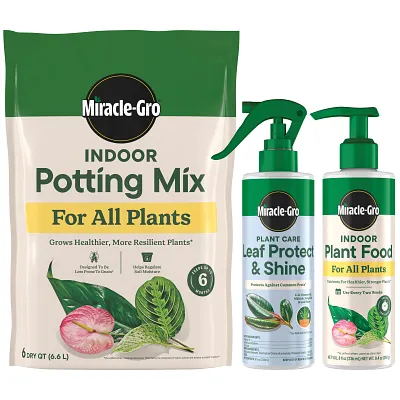
Miracle-Gro Indoor Potting Mix for All Plants |
Houseplants, indoor herbs, foliage plants |
Up to 6 months |
|
Miracle-Gro Organic Outdoor Potting Mix |
Organic outdoor containers, vegetables, herbs, flowers |
Up to 2 months |
|
Miracle-Gro Indoor Potting Mix for Tropicals |
Tropicals, palms, bird of paradise |
Up to 6 months |
How to Get the Best Results with Potting Mix
Fill containers generously.
Leave an inch of space below the rim, but don't skimp—roots need room to spread and access water, air, and nutrients throughout the pot. Water until it drains from the bottom.
Watering the soil thoroughly hydrates the full root zone and flushes salt buildup from fertilizers. If water pools at the surface, the soil may be compacted—gently loosen the top inch with a fork. Repotting 101: When to Change Your Soil Repot container plants every one to two years, or whenever roots start circling the pot base or poking through drainage holes. Spring is the ideal time, just before the active growing season, so plants can channel energy straight into new growth with fresh, nutrient-rich potting mix. Refreshing Old Soil: Can You Reuse It? Used potting mix can be reused with a proper refresh. Old mix is typically compacted and nutrient-depleted, so blend in 25–50% fresh potting soil plus a slow-release fertilizer. After growing any plants that had problems with insects or disease, starting fresh with a new bag of potting mix is the safer choice.
The terms are effectively interchangeable. Both describe a container-ready growing medium containing components like peat, coir, perlite, and slow-release fertilizers. The key distinction is that neither is the same as garden soil or topsoil, which compact in pots and can harm container plants.
No. Garden soil compacts in containers, blocking oxygen from roots and preventing water from draining properly—conditions that cause root rot and plant decline. Always use dedicated potting soil or potting mix in pots and planters.
Most potting mixes include a starter charge of slow-release fertilizer that's great for the first few months. But frequent watering gradually leaches those nutrients out. Plan to supplement with liquid or granular plant food monthly through the growing season, especially for heavy feeders like vegetables and annual flowers.
Topsoil is heavy and mineral-rich, best for leveling lawns—not for containers. Potting soil is a lighter, engineered blend built for container drainage, aeration, and nutrition. In pots, topsoil compacts like garden soil and stresses roots; potting mix is always the right choice for containers.
Look for roots circling the root ball or emerging from drainage holes, soil that sheds water instead of absorbing it, or plants that look tired despite regular feeding. Annual repotting with fresh potting mix each spring keeps most container plants performing their best.