




Update Location
Enter a ZIP code to get product recommendations and information tailored to your area.

Read the label, match the seed to your yard, and pick the right bag for your project. No guesswork required.
Standing in the grass seed aisle can feel like reading a menu in a language you don’t speak. Bluegrass, fescue, ryegrass, sun and shade, rapid, thick… What do you actually need?
Here’s the good news: choosing grass seed isn’t about finding one magic bag. It’s about matching the seed to your yard and your project, then checking the label to make sure you’re getting what you pay for. This guide walks you through all of it, so you can spend less time squinting at bags and more time enjoying your lawn.
Key Takeaways
The best grass seed for your lawn is the one that matches your climate, how much sun your yard gets, and the project you’re taking on, with a label that shows high-quality seed inside. There’s no single bag that’s best for every lawn. A seed that thrives in a sunny Georgia backyard will struggle under the maples in Michigan, and vice versa.
Answer these four questions and the right bag gets a lot easier to spot:
The rest of this guide answers these questions one at a time.
In This Guide
A grass seed label (also called a seed tag) tells you exactly what’s in the bag: which grass types and varieties, how much of the bag is actual seed, how much of that seed should sprout, and how much is weed seed or filler. Grass seed sold in the U.S. is required to carry one. Reading it takes about 30 seconds, and it’s the most reliable way to compare one bag with another.
Lawn Library
Variety (cultivar): a specific, named selection within a grass type, bred for traits like color, density, or heat tolerance. Think of it like apples: Honeycrisp is a variety of apple, and each type of grass has its own named varieties.
Pure seed is the percentage of the bag’s weight that is actual seed of the grasses listed. Higher is better. Each grass variety in a mix gets its own line, so you can see exactly how much of each is in the mix.
Two things to watch for:
Germination rate is the percentage of the pure seed that sprouted in a lab test under ideal conditions. For most grass types, look for 85% or higher. The higher the number, the less seed you need to spread to get the same coverage.
Purity and germination work together. Multiply them and you get pure live seed, the share of the bag that’s ready to grow.
Lawn Library
Pure live seed (PLS): the percentage of a bag that is viable grass seed. To find it, multiply purity by germination. A bag that’s 95% pure with 80% germination has a PLS of about 76%, so roughly three-quarters of what you’re paying for is seed that can grow.
Look for weed seed at 0.01% or lower, and ideally 0.00%. That number may look tiny, but many weed seeds are much smaller and lighter than grass seed, so even a fraction of a percent by weight can mean a lot of weeds. Nobody wants to plant next summer’s weed problem along with this fall’s lawn. Most Scotts grass seed products, including all coated grass seeds and combination products like Scotts EZ Seed Patch & Repair, are 99.99% weed-free.
Also check the noxious weed line. “None found” is what you want to see.
Other crop seed is seed from grasses or crops you didn’t ask for, like a coarse pasture grass. For a lawn, the lower the better. Inert matter is everything in the bag that isn’t seed: chaff, stems, and dirt from the field, plus intentional ingredients like seed coatings.
A high inert matter number on uncoated grass seed usually means filler. On a coated or combination product, it reflects the extra ingredients that help seed get started, and the label’s footnote lists them, including fertilizer, mulch, soil amendments, or coating material like clay.
Some Scotts grass seed comes with a coating, and it makes spreading easier. Coated seed flows more easily through a spreader, and because the coating makes the seed easy to see against the soil, you can check that you’ve spread it evenly and gauge your coverage as you go.
Some grass seed is also treated with a fungicide to protect young seedlings. Scotts EZ Seed Patch & Repair and Scotts Turf Builder Grass Seed products, for example, are treated with mefenoxam, which helps protect seedlings from damping-off, a disease favored by the damp soil that new seed needs. Treated seed is identified on the product’s package, and it should never be used for food, feed, or oil purposes.
The test date tells you when the germination rate was measured. Germination drops as seed ages, even when it’s stored at ideal conditions, so fresher is better. As a rule of thumb, look for a test date within the past year. Many labels also list a sell-by date, and some list an earlier sell-by date for certain states, so check both before you buy.
Usually, yes, as long as you compare what’s in the bag and not just the price tag. A cheaper bag can cost more in the end if it has lower germination, more filler, or more weed seed. You’ll need more of it to cover the same area, and you may spend next summer pulling weeds you planted yourself.
Bargain mixes may also lean on older, coarser varieties or annual ryegrass that won’t come back next year. Newer turfgrass varieties are bred for qualities like finer texture, deeper color, and better tolerance of shade, heat, drought, or disease.
That’s where grass genetics come in. Scotts grass seed mixes use current varieties that offer better disease resistance, drought tolerance, and environmental resilience compared with older varieties. Our turfgrass scientists select varieties based on research and independent trial data, like results from the National Turfgrass Evaluation Program (NTEP).
Seeding rate matters, too. Scotts formulates its grass seed products to meet or exceed the minimum seeding rates recommended by university turfgrass guidelines, so following the coverage on the bag puts down the right amount of grass seed the product was designed for. (More on why seeding rate matters in “How Much Grass Seed Do You Need?” below.)
| Look for | Watch out for |
|---|---|
|
Named grass varieties suited to your region |
Large amounts of annual ryegrass (unless you want temporary color) |
|
Germination of 85% or higher |
Low germination rates |
|
Weed seed at 0.01% or lower; noxious weeds "none found" |
Weed seed over 0.5%, or noxious weeds listed |
|
A recent test date |
A test date more than a year old |
|
Coverage that fits your project |
A low price per bag but a small coverage area |
|
Coverage rates that follow recommended seeding rates |
A bag that claims to cover far more ground than similar bags of the same weight, which can mean seed spread too thin |
The real comparison is cost per square foot of healthy lawn, not cost per bag. Check the coverage numbers on the back of each bag and do the math.
Cool-season grasses grow best in the North, warm-season grasses grow best in the South, and the transition zone in between can grow some of each, with tall fescue and zoysia being common choices. Matching your grass type to your region matters more than any other choice you’ll make, because the wrong grass will struggle no matter how good the seed is.
Lawn Library
Cool-season grass: grass that grows most actively in the cool temperatures of spring and fall and slows down in summer heat.
Warm-season grass: grass that grows most actively in summer heat and goes dormant (turns brown) in winter.
| Grass Type | Category | Where it grows best | Known for |
|---|---|---|---|
|
Kentucky bluegrass |
Cool-season |
North, transition zone |
Dense, fine-textured turf that spreads to fill in damage |
|
Perennial ryegrass |
Cool-season |
North, transition zone |
Quick germination, handles foot traffic |
|
Tall fescue |
Cool-season |
North, transition zone |
Deep roots, durability, heat and drought tolerance |
|
Fine fescues |
Cool-season |
North |
The most shade tolerant of the common cool-season grasses |
|
Bermudagrass |
Warm-season |
South, transition zone |
Heat, drought, and heavy wear; needs full sun |
|
Zoysiagrass |
Warm-season |
South, transition zone |
Heat, humidity, moderate traffic, some shade |
|
Centipedegrass |
Warm-season |
Southeast |
Low maintenance, acidic soils |
|
Bahiagrass |
Warm-season |
Coastal South |
Sandy soils |
|
Buffalograss |
Warm-season |
Great Plains |
Native and low maintenance |
Not sure what you’ve got now? See Different Types of Grass: How to Identify Your Lawn’s Grass Type. If you’re overseeding, use the same grass type you already have, or a mix that contains it, so the new seed blends in. Grasses with different textures and colors don’t mix well. If you want to switch to a different grass type, plan to reseed instead.
Once you know your grass type, narrow your choice by your yard’s growing conditions: shade, heavy soil, hot dry summers, a lot of foot traffic, or a history of disease. Most yards have more than one of these, so pick the seed that handles your biggest challenge and manage the rest with good care. Start with the quick picks below, then read on for the details.
| Your yard's biggest challenge | What to look for in the bag | Scotts seeding product to try |
|---|---|---|
|
Sun in some spots, shade in others |
A sun and shade mix with shade-tolerant fescues |
|
|
Heavy clay soil and a lawn showing wear |
Deep-rooted tall fescue, plus a soil improver |
|
|
Hot, dry summers (North and transition zone) |
Tall fescue as the main grass |
|
|
Hot, dry summers (South) |
Bermudagrass or zoysiagrass |
|
|
Hot, dry summers and clay soil (Great Plains) |
Native buffalograss |
|
|
Slopes or low-maintenance areas (North) |
Sheep fescue, a fine fescue that needs little mowing or watering |
|
|
Open to a grass alternative |
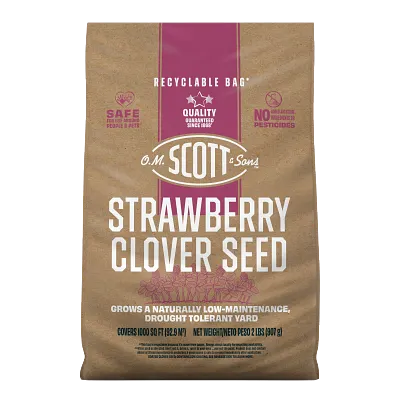
Strawberry clover, which stays green longer in dry spells |
|
|
Kids, pets, and foot traffic |
Sun and Shade Mix (North); bermudagrass (South) |
|
|
A history of lawn disease |
A mix or blend with several grasses or varieties, plus good care |
See the disease section below |
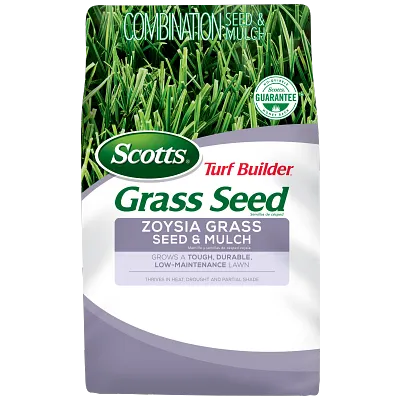
If parts of your lawn get fewer than about 6 hours of direct sun a day while other parts bake, a grass seed mix for sun and shade is the right pick. In the North, these mixes blend shade-tolerant fescues with sun-loving bluegrass and ryegrass, so each part of the yard gets grass that suits it. Scotts Turf Builder Grass Seed Sun & Shade Mix is built for exactly that kind of yard. In the South, zoysiagrass, like Scotts Turf Builder Grass Seed Zoysia Grass Seed & Mulch, handles sun and partial shade best.
A word about deep shade: every lawn grass needs some sun. Under dense trees or on the north side of a house, even the best shade mix can thin out. In spots that get less than about 3 to 4 hours of sun, consider a shade-loving groundcover or mulch instead.
Clay soil is tough on new grass seed: it crusts over, drains slowly, and packs down hard. Choose a grass with a deep root system, like tall fescue or bermuda, and loosen up the surface before you seed.
A little prep goes a long way:
If you’re thickening a lawn that's starting to thin on tougher soil, Scotts Turf Builder Thick’R Lawn combines seed and fertilizer with a soil improver made from poultry litter and gypsum. The soil improver tackles two of clay’s biggest problems: it helps alleviate soil compaction and improve drainage. The organic matter also helps improve soil structure and retain soil nutrients, so new roots have a better place to grow.

No grass seed is truly drought resistant, but you can choose a drought-tolerant grass: one that holds on longer, goes dormant without dying, and bounces back faster once water returns.
Choosing a grass that fits your climate is also one of the simplest ways to use less water year after year. In the North and transition zone, Scotts Grass Seed Drought Tolerant Mix blends tall fescue, whose deep roots help your lawn need less water once established, with Kentucky bluegrass, which spreads to fill in thin spots.
For the best turfgrass picks by region, including warm-season options, see Drought Tolerant Lawn Grasses.

If your lawn is the neighborhood soccer field or your dog’s racetrack, choose grasses that tolerate wear and recover quickly: a mix containing Kentucky bluegrass and perennial ryegrass in the North, tall fescue in the transition zone, and bermudagrass in the South.
When people look for “pet friendly grass seed,” they’re usually after grass that can handle paw traffic, wear and tear, and recover from dog spots. No grass is immune to dog urine, but tough, quick-recovering grasses, like tall fescue, perennial ryegrass, and Kentucky bluegrass, make spots easier to fix. For spot repairs, Scotts EZ Seed Patch & Repair combines seed, mulch, and lawn food in one step.
Whenever you plant grass seed, limit activity by family and pets on newly seeded areas until the grass seedlings have had time to establish, and always follow the direction on the product label.

No grass seed is completely disease proof, but you can stack the odds in your lawn’s favor. Choose a mix or blend with several different grass types or varieties of a single grass type, and pair it with good care. Disease resistance usually belongs to specific varieties, not to a specific type of grass, so variety diversity means one disease is far less likely to wipe out the whole lawn. Scotts mixes use current varieties with better disease resistance compared with older varieties, giving your lawn a head start.
A few more things help:
For information on how to spot, prevent, and treat common lawn diseases, see How to Prevent and Treat Lawn Diseases. If brown patch is the problem in your lawn, How to Identify and Control Brown Patch goes deeper.

Match the product to the size of the job. For a few bare spots, use an all-in-one repair mix. For a lawn that’s a little thin, use a product that combines seed, fertilizer, and a soil improver; if it’s noticeably thin, overseed with grass seed. For a lawn that’s more than half bare, weedy, or dead, start over with grass seed and a starter fertilizer, or a seed-and-fertilizer combination.
| Product type | What it is | Best for | Scotts option |
|---|---|---|---|
|
Lawn repair mix |
Seed, mulch, and lawn food in one |
A few bare or thin spots |
EZ Seed Patch & Repair |
|
Grass seed and fertilizer combo |
Seed plus fertilizer |
Overseeding a noticeably thin lawn, or seeding a new lawn |
Turf Builder Rapid Grass Turf Builder Grass Seed |
|
Seed, fertilizer, and soil improver |
A little seed plus fertilizer and a soil improver |
A filled-in lawn that’s slightly thin or showing wear |
Thick’R Lawn |
|
Grass seed alone |
Seed, sometimes coated |
New lawns or overseeding, paired with a starter fertilizer |
Classic Grass Seed |
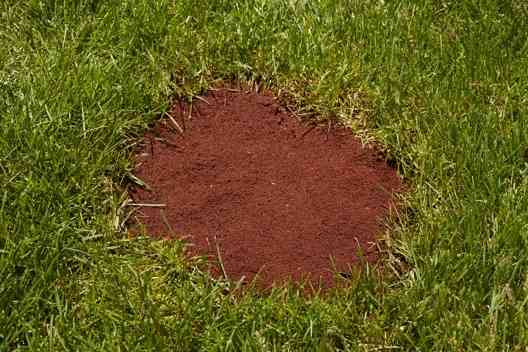
For a few isolated bare or thin spots, like a dog spot, a worn path, or a corner that never filled in, you don’t need to seed the whole lawn. A repair mix like Scotts EZ Seed Patch & Repair is built to grow in bare soil: loosen the soil, apply, and keep it watered. For the full walkthrough, see How to Repair a Lawn and Seed Bare Patches.
How you thicken a thin lawn depends on how thin it is. If your lawn is mostly filled in but looks a little sparse, pale, or tired, give it a boost with Scotts Turf Builder Thick’R Lawn. It combines grass seed with fertilizer and a soil improver in one application. The nitrogen helps your existing grass thicken and green up; the soil improver helps alleviate compaction and improve drainage; and the grass seed helps fill in thinner areas. Choose the lawn seed mix that matches your lawn.
If your lawn is noticeably thin, with soil showing across large areas, it needs more seed. Overseed it with the Scotts Turf Builder Rapid Grass Seed mix that matches your grass type at the overseeding rate. Either way, match what you already have: use the same grass, or a mix that contains it, so the new grass blends in. See How to Overseed a Thin Lawn.
When more than half your lawn is bare soil, dead grass, or weeds, or when you want to switch to a different grass type, it’s time for a fresh start. That means clearing the area, preparing the soil, and seeding from scratch. If speed matters, Scotts Turf Builder Rapid Grass pairs seed with fertilizer to grow grass 2X faster than seed alone (when applied at the new lawn rate, subject to proper care). If you don’t use a seed-fertilizer combo product, feed your newly seeded lawn with Scotts Turf Builder Starter Food for New Grass to help new roots get established quicker. See How to Reseed a Lawn and How to Grow a New Lawn.
Most grass seed germinates in about 5 to 30 days, depending on the grass type and conditions. Perennial ryegrass is usually the fastest, sprouting in 5 to 10 days, while Kentucky bluegrass is the slowest common lawn grass at 14 to 30 days. Expect a filled-in, established look to take several more weeks after that.
| Grass Type | Typical days to germinate |
|---|---|
|
Perennial ryegrass |
5–10 |
|
Tall fescue |
7–14 |
|
Fine fescues |
7–14 |
|
Bermudagrass |
7–21 |
|
Zoysiagrass |
14–21 |
|
Buffalograss |
14–21 |
|
Centipedegrass |
14–21 |
|
Kentucky bluegrass |
14–30 |
|
Bahiagrass |
14–30 |
Mixes sprout in waves, so don’t worry if you see ryegrass up in a week and bluegrass catching up later. Germination speeds up when:
If you want to speed up lawn establishment, look for a seed-and-fertilizer combination product, like Scotts Turf Builder Rapid Grass. Just be cautious with bargain “quick” mixes heavy in annual ryegrass: they’re fast, but they don’t last.
Plant cool-season grass seed in early fall, with spring as a second option. Fall gives cool-season lawn seed warm soil, cool air, and less competition from weeds, which is why it’s prime seeding time in the North. For the full fall playbook, see Fall Is the Best Time to Seed Cool-Season Lawns.
Cool-season grass seed germinates best when soil temperatures are between 50°F and 65°F. Once soil drops below 50°F, germination slows and then stalls, and seedlings won’t have time to establish before the ground freezes. That’s why seeding after mid-October can be risky in most northern areas. Aim to get cool-season seed down at least 6 weeks before your first hard frost. In spring, seed as soon as soil temperatures reach 50°F, and finish before soil warms above 70°F, so seedlings can establish before summer heat arrives.
Plant warm-season grass seed from late spring through early summer, once soil temperatures stay above 65°F.
For warm-season grasses, it’s too late to seed once nighttime temperatures consistently drop below 65°F, since seedlings need warm weather to establish before going dormant in winter.
To know how much grass seed to buy, measure your lawn’s square footage and then check the coverage on the bag. Most bags list two numbers: an overseeding rate (the larger area, for spreading seed into an existing lawn) and a new lawn rate (the smaller area, for bare soil). Use the rate that matches your project, or you may come up short.
The right seeding rate gives you enough grass seedlings to fill in your lawn, with enough room for each one to grow into a strong, mature grass plant. University turfgrass research shows that misapplying in either direction causes problems:
That’s why it pays to follow the coverage on the bag: you’re putting down the amount of seed the product was designed for.
Seed size is one reason seeding rates, and bag coverage, vary from grass to grass. A pound of Kentucky bluegrass holds roughly 2 million seeds, while a pound of tall fescue or perennial ryegrass holds about 230,000 seeds. Larger-seeded grasses are sown at much higher rates to get the same coverage.
Growing conditions matter, too. Not every seed that can sprout will survive. A well-prepared seedbed, good seed-to-soil contact, seeding at the right time of year, and steady watering all help more of your seed grow into lawn.

Not truly. No grass resists drought, but some tolerate it far better than others. Find the best drought-tolerant grass for your region in Drought Tolerant Lawn Grasses.
Usually not. Overseeding works best with the same grass you already have, or a mix that contains it. Grasses with different textures, colors, and growth habits don’t blend well. Seeding bermudagrass into a zoysiagrass lawn, for example, can leave it looking patchy, because the two differ in color and texture and the faster-spreading bermudagrass can take over in patches. Many seed mixes are built to combine compatible grasses, so check the label against your lawn. To switch to a different grass type, reseed instead.
The exception is winter overseeding in the South. Bermudagrass goes dormant and turns tan once cool weather arrives, so many Southern homeowners overseed it in fall with ryegrass, a cool-season grass that stays green through the winter. The ryegrass is meant to be temporary: as temperatures heat up in late spring and the bermudagrass greens up again, the ryegrass thins out and dies back. Annual ryegrass is the less expensive option and fades sooner, while perennial ryegrass gives a finer, more even look but can linger longer into spring and compete with the bermudagrass as it wakes up. Time it for early to mid-fall, as the bermudagrass starts to slow down, and mow it short before seeding so the ryegrass seed can reach the soil.
Some grass types are less susceptible to certain diseases, but grass seed is rarely completely immune. Disease resistance usually belongs to specific varieties, so mixes and blends with several grass types and/or varieties give your lawn better odds. Scotts grass seed mixes use current varieties, many with better disease resistance compared with older varieties. Good care, including the right amount of fertilizer, morning watering, and proper mowing, matters just as much as the seed you choose.
Perennial ryegrass is the fastest-germinating lawn grass, usually sprouting in 5 to 10 days. Annual ryegrass can sprout even faster, but it dies after one season. A seed-and-fertilizer combination like Scotts Turf Builder Rapid Grass can also help speed things up, growing grass 2X faster than seed alone (when applied at the new lawn rate, subject to proper care).
New grass seed needs consistent moisture to sprout and take root, so the goal is to keep the top layer of soil moist, not soggy, until your new grass is established. Always follow the watering directions on your grass seed label, since they can vary by product. For most Scotts grass seed, that means watering once or twice daily, or as needed, for at least 3 weeks or until seedlings reach 2 inches tall.
A few best practices help:
Wait until your new grass is at least 2 to 3 inches tall before you mow it for the first time. Set your mower to the proper setting for your grass type, make sure the blade is sharp so it cuts cleanly instead of tearing the young grass, and never remove more than one-third of the blade height in a single mowing. Mow when the grass is dry, and skip the mower on any spots that are still thin or bare until they catch up. If you overseeded an existing lawn, resume mowing once the lawn reaches your usual mowing height.
A seeding rate is the amount of seed spread over a set area, usually measured in pounds per 1,000 square feet. Seed too thin, and your lawn comes in patchy and weedy; seed too heavy, and crowded seedlings grow in weaker. Always use the spreader settings listed on the bag to apply the right seeding rate.
Yes. “Lawn seed” and “grass seed” mean the same thing: seed for growing a lawn. You’ll see both terms on bags and in stores.
Stored in a cool, dry place, grass seed can last 2 to 3 years, but its germination rate drops over time. For best results, plant your grass seed within a year of buying it, and check the test date on the label before you buy.
Usually, but timing depends on the product. As a general rule, wait 4-5 months after applying a crabgrass preventer and about a month after most other weed control products before seeding, unless the product is designed for use when seeding, like Scotts Turf Builder Triple Action Built for Seeding. Always check the label of the product you used for seeding restrictions.
It isn’t recommended. Straw can carry weed and other unwanted seeds into your lawn. Instead, spread a thin layer of quality soil, like Scotts Turf Builder LawnSoil, over the prepared area, apply seed, and rake it in lightly, or use a product with built-in mulch, like EZ Seed Patch & Repair, for bare spots.
Scotts grass seed is sold at most home improvement centers, mass merchants, hardware stores, and garden centers. You can also purchase it online, where you can shop Scotts grass seed by grass type, sunlight, and project.