




Update Location
Enter a ZIP code to get product recommendations and information tailored to your area.

Backyard Builder
Create a custom backyard solution with our interactive tool
Grass seed is the most cost-effective way to start, thicken, or repair a lawn. There are varieties suited to your region, light level, and intended use. Grass seed types span cool-season favorites like tall fescue, Kentucky bluegrass, and perennial ryegrass to warm-season options like Zoysia, bermudagrass, and bahiagrass.
Grass seed and sod both produce a green lawn but serve different needs and budgets. Sod delivers an instant lawn within days; grass seed takes 4–8 weeks for germination and establishment but at a fraction of the cost and with far more grass seed varieties available. For most homeowners seeding large areas or overseeding an existing lawn, grass seed is the smarter investment.
When soil reaches the correct grass seed germination temperature — 50–65°F for cool-season grasses and 65–70°F for warm-season grasses — the seed absorbs water, breaks dormancy, and sends out a root and shoot. Pairing your grass seed with a starter fertilizer feeds seedlings through their first weeks and builds the deep root system needed for a strong, lasting lawn.
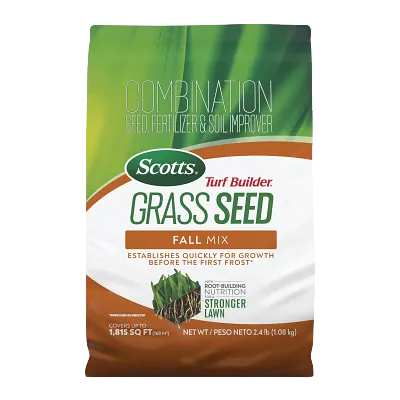
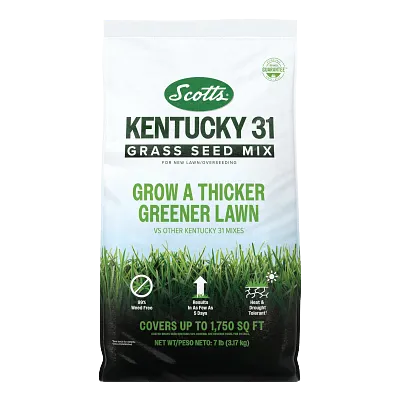
Not every seeding project is the same, and Scotts has a product matched to each one.
The best grass seed for your lawn depends on your climate, location, and how much sunlight your yard receives. Cool-season grasses—tall fescue, Kentucky bluegrass, perennial ryegrass—thrive in the North; warm-season grasses—bermuda, bahia, zoysia, and centipede—dominate in the South. For the transition zone, heat-tolerant tall fescue blends are the reliable choice.
| Grass Type / Blend | Best For | Region |
|---|---|---|
|
Sun & Shade Mix |
Mixed light, thin lawns |
Northern / Transitional |
|
Kentucky Bluegrass |
Dense, fine-textured turf |
Northern |
|
Perennial Ryegrass |
Quick germination, high traffic |
Northern / Transitional |
|
Tall Fescue |
Durable everyday use |
Northern / Transitional |
|
Drought Tolerant Mix |
Dry summers, water limits |
Western / Southern |
|
Bermudagrass |
Heat, drought, and heavy wear |
South / Transition |
|
Buffalograss |
Native, low-maintenance |
Great Plains |
|
Bahiagrass |
Sandy coastal soils |
Coastal South |
|
Centipedegrass |
Low maintenance, acidic soil |
Southeast |
|
Zoysiagrass |
Heat, humidity, moderate traffic |
South / Transition |
When to Plant Grass Seed for Best Results
The best time to plant new cool-season grass seed or overseed a cool-season lawn is early fall (late August through mid-October), when soil temperatures are in the ideal 50–65°F range and weed pressure is low. Fall vs. spring seeding consistently favors fall: cooler air reduces seedling stress and germination is faster because the soil is already warm. Spring seeding works from mid-April through May before soil temperatures exceed 70°F. For warm-season grasses, late spring to early summer—when soil stays above 65°F—is the ideal seeding window.
How to Plant Grass Seed: Step-by-Step
Good soil preparation is what separates a patchy lawn from a lush one.
How long does it take grass seed to grow? Perennial ryegrass germinates in 5–10 days; tall fescue in 7–14 days; Kentucky bluegrass in 14–30 days; bermudagrass in 10–30 days; and zoysia in 14–21 days.
Grass Seed Aftercare: Watering and Mowing
Watering new grass seed correctly is the most critical aftercare step: keep the seedbed moist with 2–3 light waterings per day for the first 2-3 weeks so the top ½ inch of soil never dries out. Once seedlings reach 1 inch tall, shift to deeper watering every 2–3 days. The first mowing after seeding sprout should wait until the grass reaches 3–4 inches tall; then mow to a height of 2.5–3 inches, removing no more than one-third of the blade at once.
Cool-season grasses (tall fescue, Kentucky bluegrass, perennial ryegrass) suit northern states; warm-season grasses (zoysia, bahiagrass, bermudagrass) thrive in the South. Scotts regional grass seed mixes—including Northeast and Pacific Northwest mixes—help take the guesswork out of finding the best grass seed for your area.
In the northern and transitional U.S., if any part of your yard receives fewer than 6 hours of direct sun daily while other areas stay in full sun, a sun and shade grass seed blend is the right pick. It combines shade-tolerant fescues with sun-thriving ryegrasses in one bag.
For cool-season lawns, tall fescue is widely regarded as the most durable grass seed: its deep root system delivers superior drought tolerance and resilience to foot traffic. For warm-season lawns, bermudagrass is the standout—heat-tolerant, drought-resistant, and quick to recover from foot traffic.
Cool-season grasses germinate best at 50–65°F soil temperature; warm-season grasses need soil consistently above 65°F. Use a soil thermometer—soil temperature is more reliable than air temperature for timing your seeding.
Fall is better for cool-season grasses: soil is warm, air temperatures are cooler, and weed competition is lower. Spring seeding works but grass needs to be established before summer heat stress sets in. For warm-season grasses, spring through early summer is the best seeding window.
Loosen the top 2–3 inches of soil, remove rocks and debris, level uneven spots, and apply a starter fertilizer for grass before spreading. Core aerating before overseeding improves seed-to-soil contact which can help seed germination in established lawns.
Hand-scattering seed almost always produces uneven, patchy coverage. If spreader settings are listed on the bag of grass seed, using a spreader is the single most important step for consistent results. Mow short, set your spreader dial to the rate listed on the bag for your seeding project, apply following package directions, rake lightly for good soil contact, and keep watering new grass seed consistently until seedlings establish.
Water lightly 2–3 times per day for the first 2-3 weeks to keep the top ½ inch of soil consistently moist. Once seedlings reach 1 inch tall, shift to deeper, less-frequent watering every 2–3 days.
Perennial ryegrass: 5–10 days; tall fescue: 7–14 days; Kentucky Bluegrass: 14–30 days; Zoysia: 14–21 days; Bermudagrass: 10–30 days. Staying within the ideal grass seed germination temperature range is the biggest factor in fast results.
Wait for the first mowing until the new grass reaches 3–4 inches tall—typically 6–8 weeks after germination. Set your mower to 2.5–3 inches and use a sharp blade to avoid pulling and damaging young seedlings.
For cool-season grasses in northern regions, seeding after mid-October is risky—soil below 50°F stalls germination and seedlings won't establish before the ground freezes. For warm-season grasses, stop seeding once nighttime temperatures consistently drop below 65°F.